Distribution Is the Product: A Decade of Building Toward the Only Problem That Actually Matters

There is a version of this story that starts with code. With clean architecture decisions, well-scoped MVPs, and product roadmaps that actually got shipped. That version is true, but it misses the point.
The real story starts with content. Specifically, with the realization that hits somewhere around the hundredth website you have built for someone: the technology was never the hard part. What people struggled with, what they always struggled with, was figuring out what to say, and then actually saying it consistently enough for anyone to care.
That insight does not arrive all at once. It accumulates. And when it finally lands with full weight, it changes everything about how you think about building products.
What a Decade in Agencies Actually Teaches You
Working inside a digital agency, and then building one from the ground up, puts you close to a problem that most product builders never see clearly. Every client engagement, regardless of industry or budget, eventually circles back to the same question: what does this brand actually stand for, and how does it communicate that to the people who need to hear it?
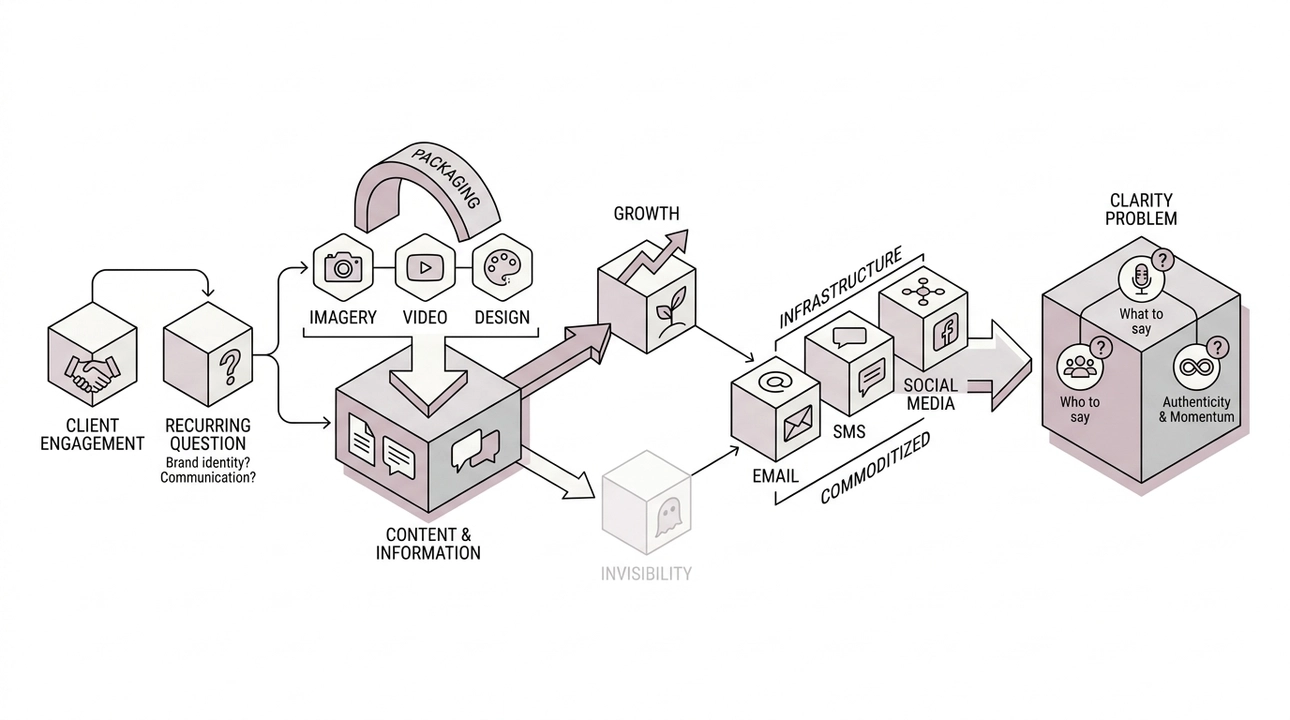
Hundreds of websites and digital builds later, a pattern becomes impossible to ignore. Imagery matters. Video helps. Design creates first impressions. But none of it carries meaning without the content underneath it. Information, written or spoken, is the foundation. Everything else is packaging.
The agencies that understood this built clients who grew. The ones that leaned on aesthetics alone built clients who looked good and stayed invisible. Distribution, in other words, is not a marketing problem. It is an existential one.
That lesson sharpened further when work shifted toward building and scaling marketing technology systems at an innovation lab level. Email, SMS, social media distribution, at scale, across complex systems, revealed something else: the infrastructure for reaching people had become almost commoditized. The tooling existed. The channels existed. What remained stubbornly, persistently difficult was the clarity problem. What to say, who to say it to, and how to keep saying it without losing authenticity or momentum.
The Venture Studio View Changes the Question
Running a venture studio changes how you see problems. When the job is to build multiple products across different verticals, and occasionally to bring that same thinking into private equity portfolios operating vertical SaaS businesses, you stop asking "what can we build?" and start asking "what actually moves the needle for people?"
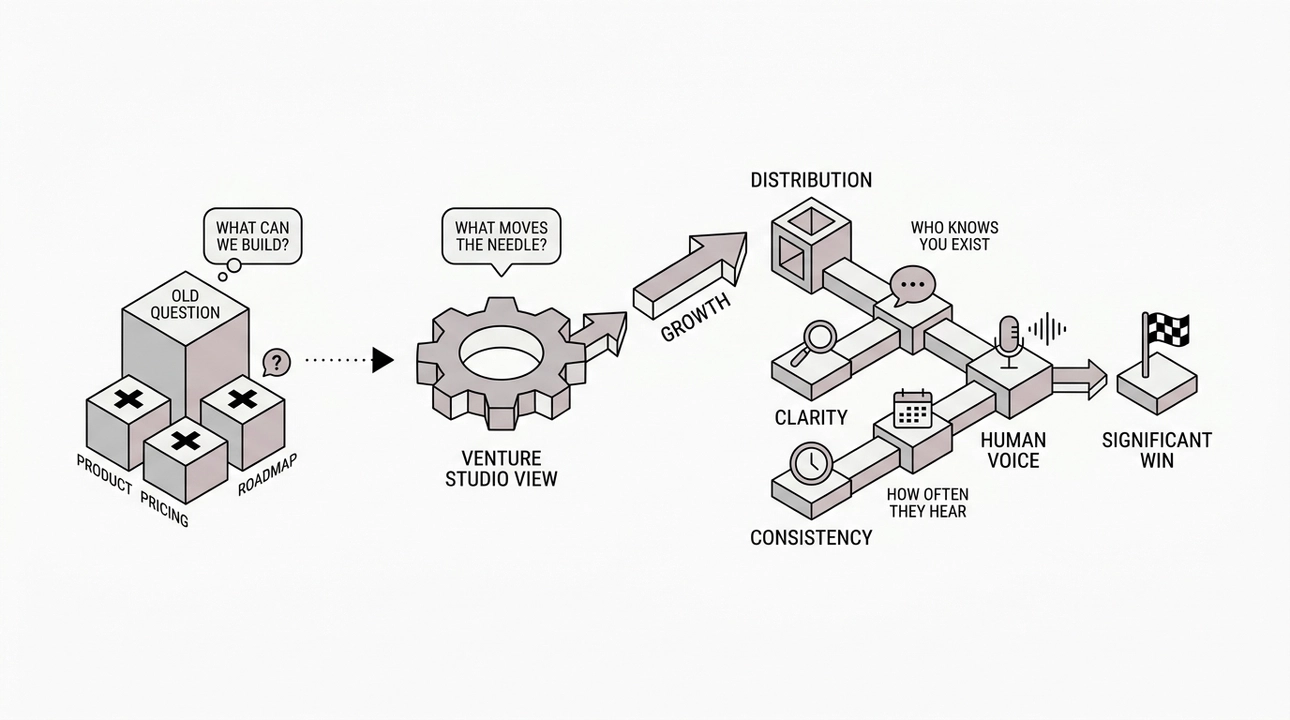
In a B2B context especially, the answer kept coming back to growth. And growth, more often than not, was directly proportional to distribution. Not product quality. Not pricing. Not the roadmap. Distribution. Who knows you exist, what they understand about what you do, and whether they hear from you often enough to trust you.
The gap was not technical. The tooling to distribute content across channels has existed for years. The gap was always human: founders who could not articulate their point of view clearly, operators who did not have time to show up consistently, builders who were full of ideas but could not translate them into the kind of visible, resonant presence that compounds over time.
Watching that gap play out across startups, agencies, PE portfolios, and venture bets makes one thing very clear. Whoever solves the clarity and consistency problem at scale, without stripping out the human voice, wins something significant.
Clarity, Confidence, Consistency: The Framework Behind the Build
The insight that eventually became a product foundation is simple enough to say in three words, but hard-won enough that it took years to see clearly.
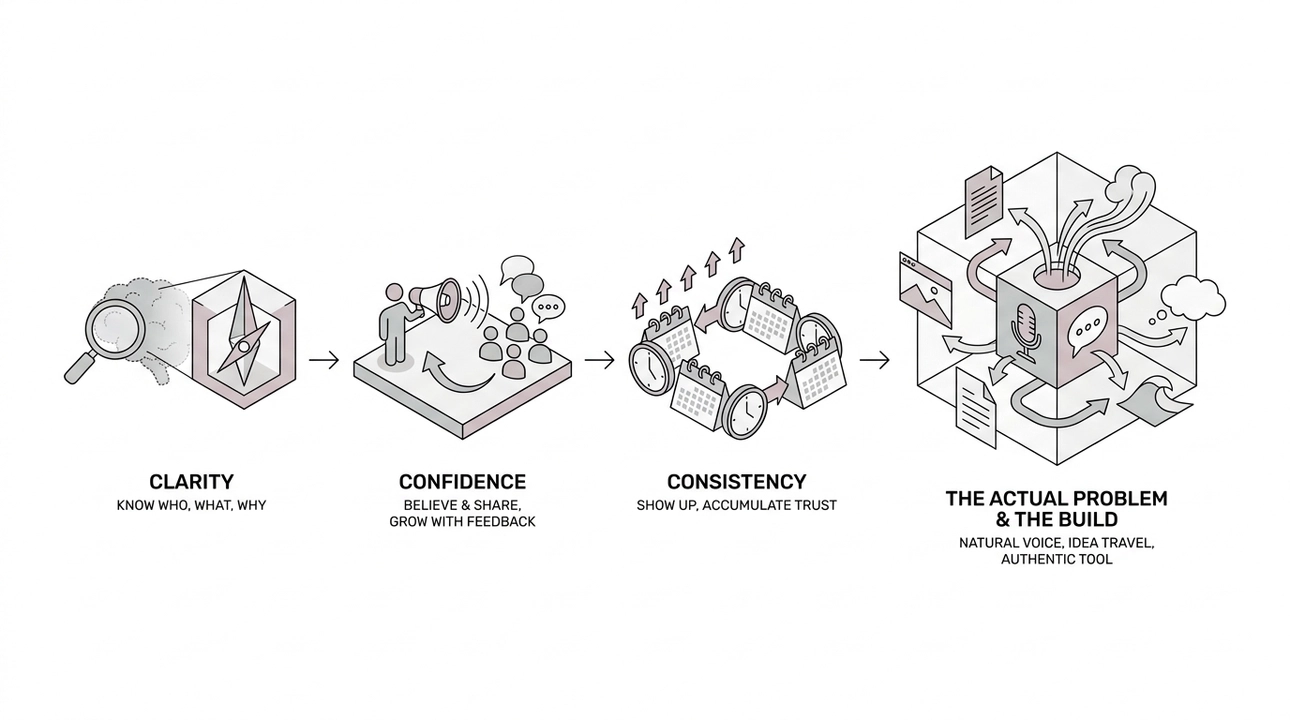
First: clarity. Before anyone can show up and be heard, they need to know who they are, what they do, and why it matters. That sounds obvious. It almost never is. Most people, and most brands, operate with a fuzzy self-concept that bleeds into everything they put out into the world. Sharpening that is not a branding exercise. It is a prerequisite.
Second: confidence. Ideas do not spread just because they are good. They spread because someone believed in them enough to share them, defend them, and build a conversation around them. Confidence in one's own perspective is something that grows with feedback, with community, with the experience of putting an original thought into the world and watching people engage with it. The tools people use should accelerate that cycle, not replace it.
Third: consistency. Visibility is not an event. It is a practice. The people who become known in their fields are rarely the smartest in the room. They are the ones who showed up, kept saying things worth saying, and did it long enough for trust to accumulate. Consistency is where most people fall short, not because they lack ideas, but because the overhead of staying present is just too high.
These three things, clarity, confidence, consistency, are not a content strategy framework. They are the actual problem. And the most interesting question in this space right now is what it looks like to build a tool that genuinely helps people with all three, without turning them into a content machine or flattening their voice into something generic and forgettable.
The answer involves voice. It involves conversation. It involves building something that pulls ideas out of people in the format that feels most natural to them, and then helps those ideas travel. There is something being built right now that is aimed directly at that problem. It is close. Very close.
The Long Game Finally Has a Shape
Looking back across the full arc, from agency floors to innovation labs to venture studios to private equity consulting, what stands out is not the range of industries or the scale of the systems. What stands out is that the same problem kept appearing in different clothes.
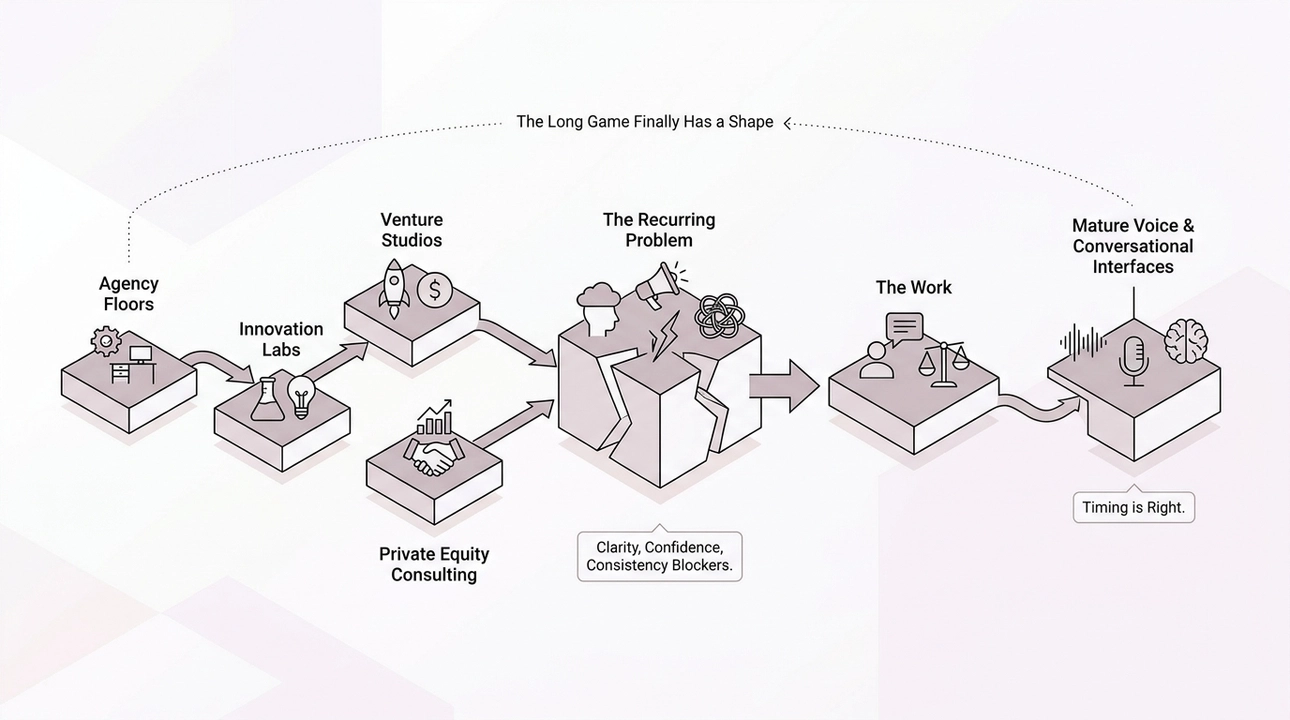
People and organizations with real things to say, real expertise, real value, struggling to make themselves visible in a consistent, credible, human way.
Technology was never the blocker. It was always the clarity problem, the confidence gap, the consistency tax.
Building something that addresses all three, that genuinely helps people show up as themselves, at scale, without losing what makes them worth listening to: that is the work. And the timing, as voice and conversational interfaces finally mature into something genuinely useful, has never felt more right.
Something built from all of this is almost here. The story behind it has been a long time coming.