From Websites to Voice: The Real Problem We Discovered While Building Onliweb
It’s been a full year, and honestly, a pretty meaningful one.
As the year wraps up, I wanted to share where the startup I’ve been working on is heading, and why it looks different from where it began.
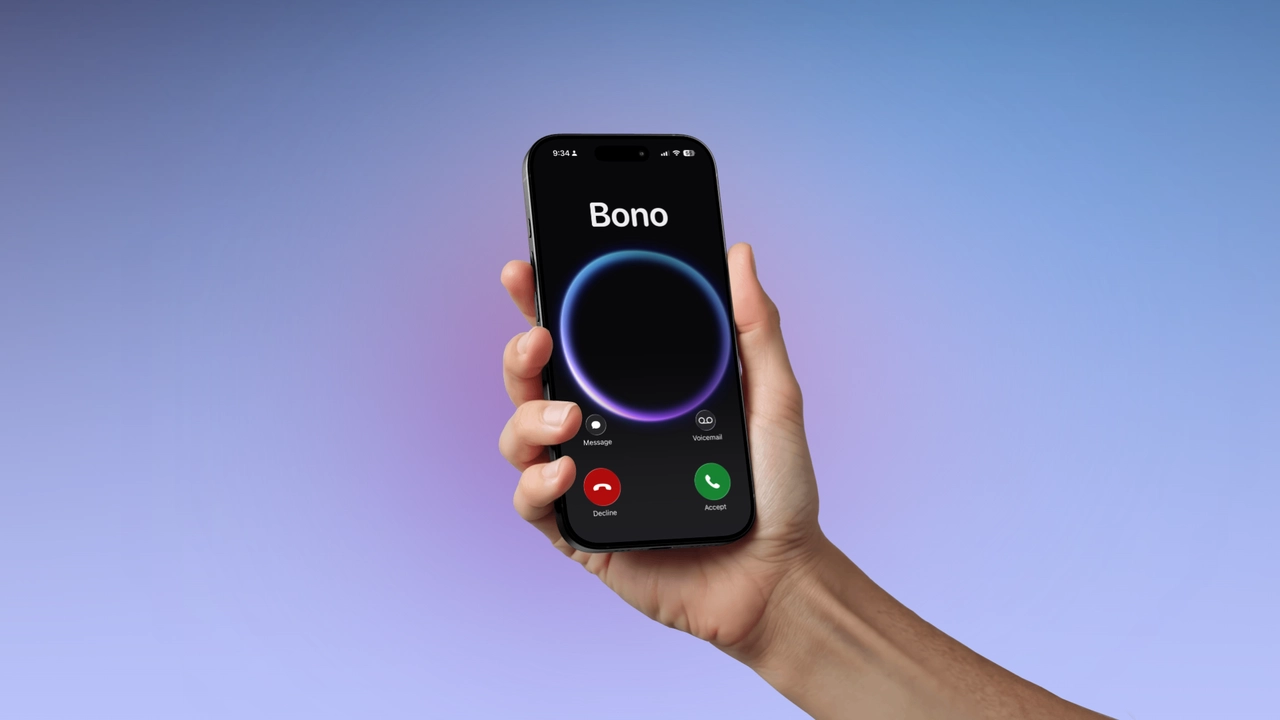
What we’re building today is called Bono, but the story starts a little earlier.
It started with a very practical problem.
I kept seeing smart professionals spend weeks overthinking something that should’ve taken minutes. A personal website. Design choices. Layouts. What to say in an About Me. How to add a blog, a newsletter, a contact form. How to stitch together half a dozen tools just to look credible online.
So the first product we built was Onliweb.

Onliweb was designed as a quick website builder that simply did the job for you. No overthinking. It generated the structure, the copy, the pages, the forms, the blog, the newsletter, all in one place, so you could focus on your actual work instead of managing tools.
Underneath that was a clear hypothesis.
We believed that professionals already have valuable knowledge and expertise, and that many of them could share that through paid consultations, advisory calls, or engagements. So one of Onliweb’s core features wasn’t just the site, it was monetization.
Onliweb would generate a consultation offering for you, let you set or adjust your rate, and connect it to an integrated calendar and payments. In theory, everything you needed to go from “I know things” to “people can book me” was there.
People liked the idea.
But something unexpected kept happening.
The first thing most people did after their site was generated wasn’t adjusting pricing or enabling bookings. They scrolled straight to the content. Specifically, their first AI-generated blog post. They read it carefully, not as a visitor, but as themselves.
And that’s where the real signal showed up.
The feedback wasn’t about monetization. It was about voice, depth, and alignment.
“This doesn’t quite sound like me.”
“I wouldn’t explain it this way.”
“The idea is there, but the thinking feels shallow.”
The more we paid attention, the clearer it became.
The real gap wasn’t monetization. It was ideas worth sharing.
Not ideas as content or more posts, but content as faithful expression. Translating what’s in someone’s head into something written, structured, and worth sharing is far harder than adding a checkout button.
That insight led to a bigger question.
If people say they want their content to be authentic, why does so much of what exists online feel hollow?
Part of the answer is how authenticity is measured today. We’ve quietly equated it with engagement. Likes, views, shares. There’s a fine line there. When engagement becomes the primary signal, depth often loses. Ideas get compressed. Nuance disappears. And over time, the internet fills up with fast, optimized content that looks productive but says very little.
This is what we’re intentionally trying not to become.
Bono is built on a different set of first principles. It starts with the belief that people think best out loud. That real ideas take time to surface. And that longer conversations lead to better content than clever prompts ever will.
Instead of asking you to write, Bono talks to you. It listens. It asks thoughtful follow-ups. It captures the thinking that normally disappears after a meeting or a call. From there, it turns those conversations into long-form content that still carries your voice, your nuance, and your intent.
The purpose is simple, but not easy.
To empower people to share their ideas without the friction of tools, time, or resources, and without contributing to the AI slop we’re all trying to scroll past.
That means fewer shortcuts. Longer conversations. Real ideas. Content that compounds instead of performs.

All of this is being built under 11X Ventures, alongside a small but incredibly thoughtful team I’m deeply grateful for. Their care, taste, and patience are a big part of why we’ve been able to stay true to these principles as we build.
We’re moving slowly and deliberately, learning from real usage and real conversations. If this resonates, I’d love for you to try Bono, or simply send me a message and share your thoughts.
Wishing you a restful holiday season and a healthy, meaningful year ahead.
Onwards,
Zee