Integrations and Partnerships Are the New Startup Moat (And Most Builders Are Sleeping on This)

Building a defensible startup used to mean owning proprietary technology that nobody else could touch. That window has narrowed considerably. The tools to build core IP are more accessible than ever, the models are commoditizing fast, and what used to take a team of twenty engineers can now move forward with a fraction of that. The playing field has leveled, and that changes the question every founder should be asking. Not "what can we build?" but "what can we build that's genuinely hard to copy?"
My answer right now: integrations and partnerships. Done well, they are two of the clearest moats available to a startup today.
Why Integrations Are Harder to Replicate Than Features
When I talk about integrations, I mean the connective tissue between your product and the broader ecosystem your users already live inside. Every platform connection you build, whether that is LinkedIn, X, a scheduling tool, or a CRM, adds a layer of stickiness that a competitor cannot replicate by just shipping a similar feature. They have to go through the same submission queues, the same review processes, the same back-and-forth with developer relations teams. That takes time. And in a fast-moving market, time is a real moat.
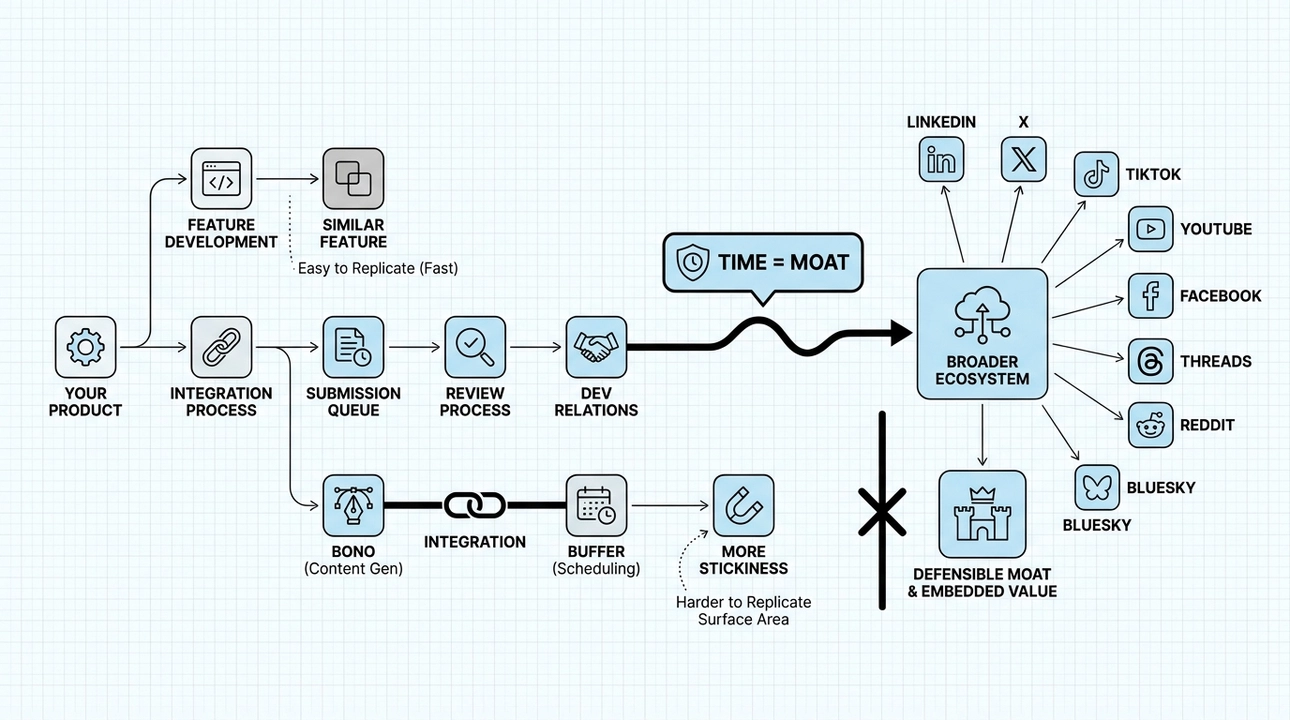
With Bono, we have been deliberate about this. We already publish to LinkedIn and X, and we are actively working through integrations with TikTok, YouTube, Facebook, Threads, and eventually Reddit and Bluesky. Each one of those adds a connection point that makes Bono more embedded in the way people actually work and share content. More importantly, each one takes a competitor more effort to match than simply writing better code.
The Buffer integration is a good example of the mindset at play. Rather than trying to replace a scheduling tool that already has a loyal user base, we are building alongside it. Bono handles the content generation side, Buffer handles the scheduling. The integration makes both products stickier, and it is a connection that takes real work to replicate. That is the kind of surface area you want to be building.
Partnerships as a Business Development Moat
Integrations live mostly on the technical side of the moat. Partnerships live on the business development side, and they require a different kind of thinking. Where integrations are about ecosystem depth, partnerships are about leverage: finding teams with skills, networks, or distribution that would take you years to build on your own, and figuring out how to combine forces in a way that accelerates both sides.
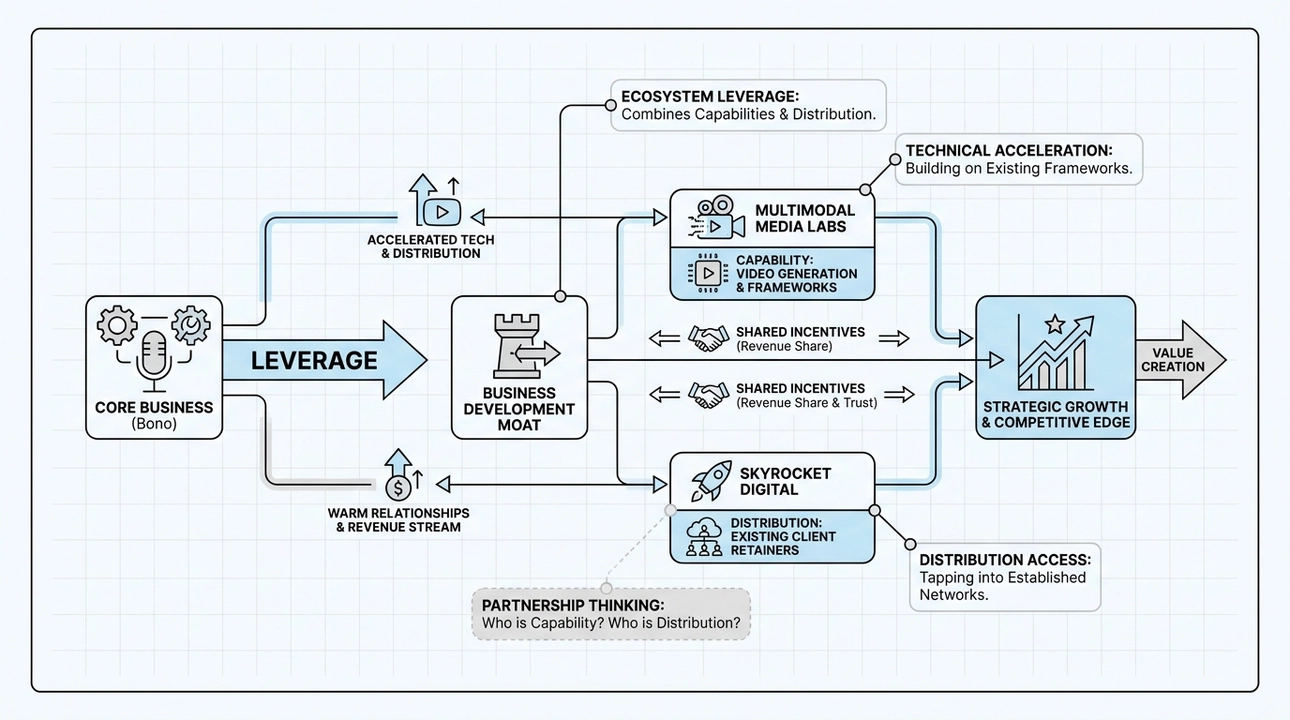
Right now, we are exploring a partnership with Multimodal Media Lab (MML), an immersive experiences and video generation lab based in Vancouver. We actually hosted the Bono launch party at their space, so the relationship already has some history behind it. The reason this partnership makes sense is straightforward: they are doing genuinely advanced work on video generation using their own frameworks and multimodal systems, and we are building on the voice side. Rather than us spending resources trying to build video generation from scratch, with limited control over the outcome, we can leverage what they have already built. They get distribution through what we are doing; we get video technology we did not have to build ourselves. Revenue share makes the incentives clean.
That is the structure I keep coming back to for partnerships: who can be the capability, and who can be the distribution? When those roles are clear, the deal is usually worth pursuing.
The Skyrocket Digital relationship works differently but follows the same logic. That is an agency I led product and technology for nearly a decade ago, which means there is already a foundation of trust and shared history. They have an existing book of clients on retainer. We have a B2B product that can add real value to those clients. A partnership lets the agency offer something meaningful to clients they are already serving, creates an additional revenue stream through a revenue share model, and gives Bono a warm path into a set of relationships that would otherwise take months to develop cold. Trust already exists. The leverage is already there.
The Build vs. Partner Decision
Every time a new opportunity surfaces, there is a judgment call: do we build it ourselves, do we find a partner, or do we pursue an integration? I do not have a rigid framework for this, but the question I keep coming back to is: does this team have the skills, the expertise, the network, or the distribution that would let us move ten times faster than if we tried to do it ourselves? If yes, we explore that route. If no, we build it.
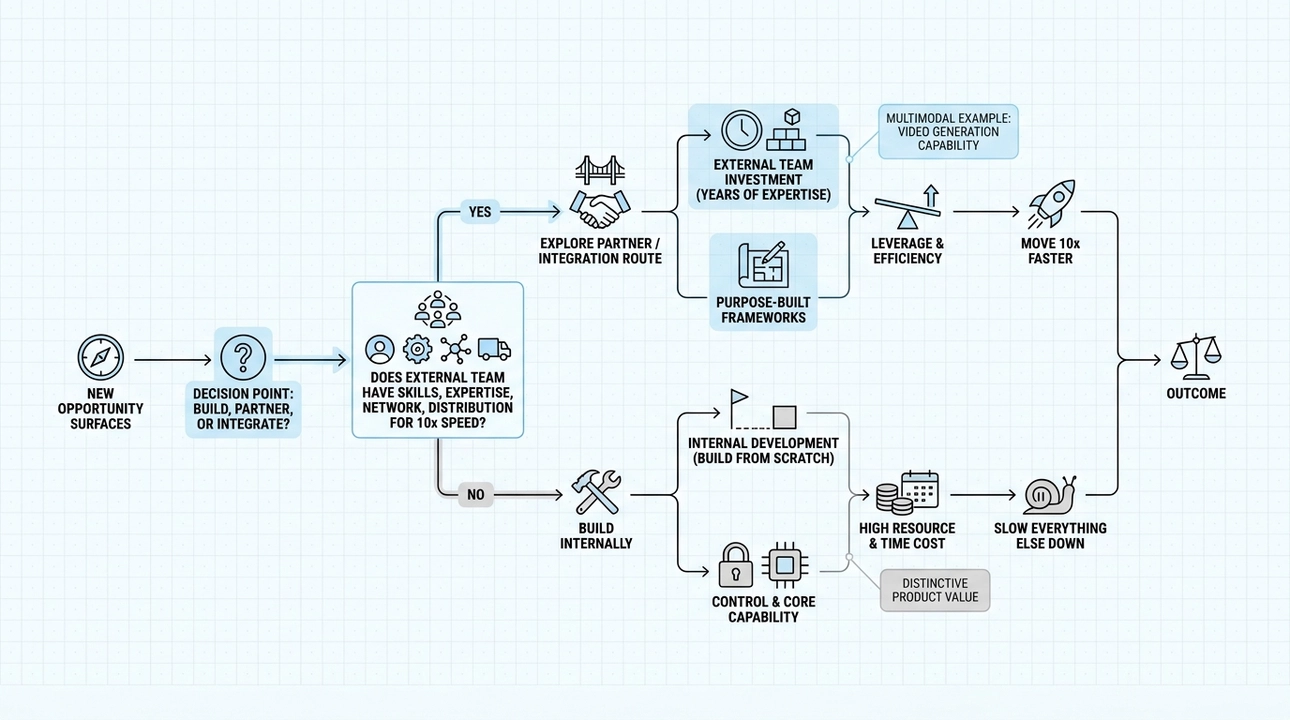
That calculus cuts both ways. Sometimes the right answer really is to build, especially when control matters or when the capability is core to what makes the product distinctive. But when an external team already has years of investment in exactly what you need, trying to replicate that from scratch is not ambition, it is inefficiency.
The Multimodal partnership is a clean example of this logic. We could attempt to build video generation capabilities internally. But their team has purpose-built frameworks for exactly that, and the time and resource cost of trying to match what they have done would slow everything else down. The leverage calculation is not even close.
The MCP Layer Is Making This Non-Optional
There is a broader shift happening that makes the integrations conversation even more urgent. With the rise of API and MCP layers, the expectation from both developers and users is that products should be connectable by default. MCP in particular is moving quickly, and while the cost can be a bit higher, the speed at which you can establish meaningful connections has changed dramatically.
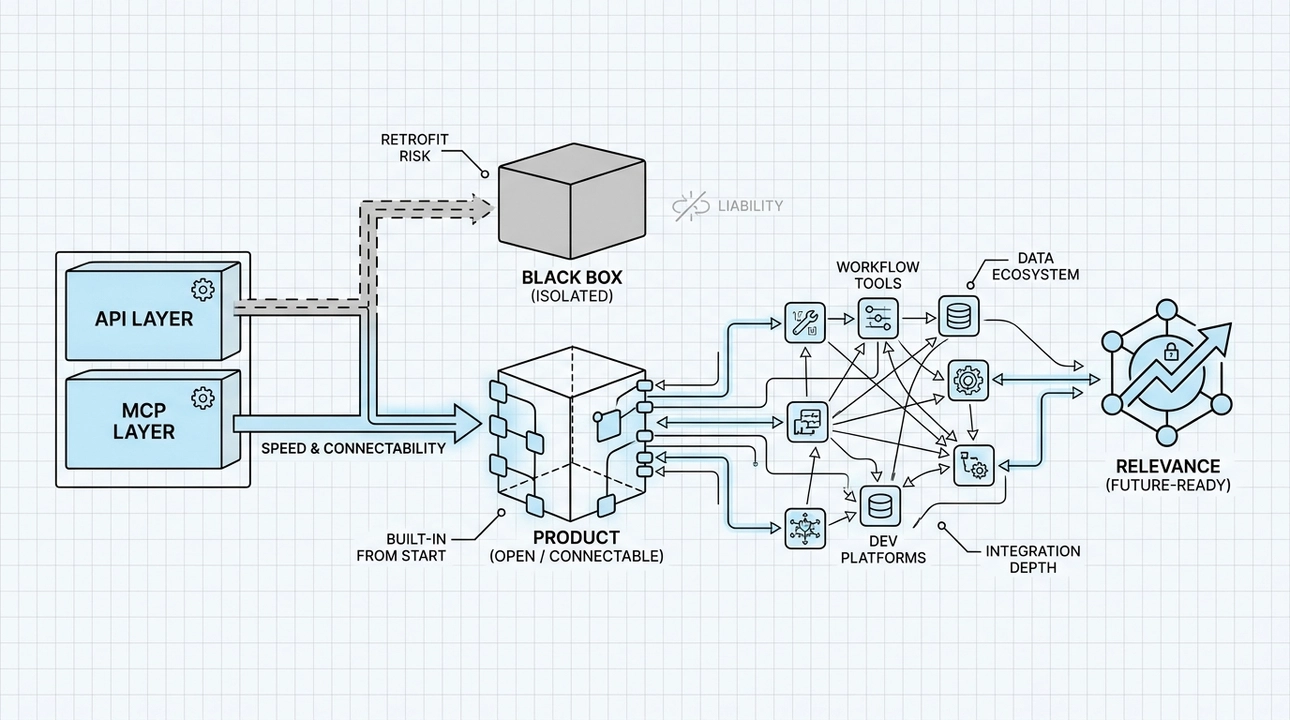
What this means practically is that a product without integration depth is increasingly a product that looks like a black box. Nobody wants to build on top of a black box. Nobody wants to recommend a black box to their team. If you are not thinking about how your product fits into the larger workflow and tooling ecosystem your users operate in, that isolation becomes a liability faster than most founders expect.
The startups that will maintain relevance are the ones building with this in mind from the start, not retrofitting it after they realize the ecosystem has moved on without them.
The Takeaway
Building something technically solid is still necessary. It is just no longer sufficient. The startups I see creating real differentiation right now are the ones thinking carefully about where their product sits in a larger ecosystem, who they can bring alongside them to move faster, and how many meaningful connections they can build before a competitor can replicate them.
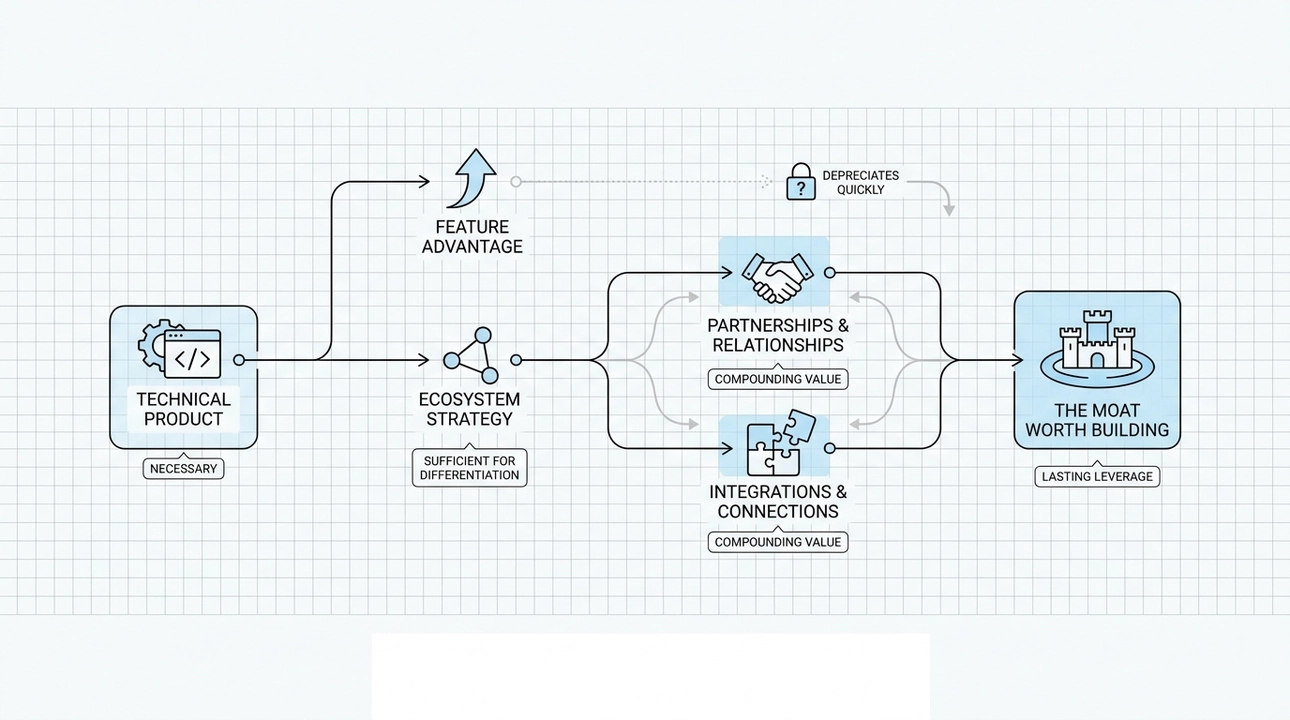
Integrations compound. Relationships compound. The leverage you create through a well-structured partnership or a well-placed integration does not depreciate the same way a feature advantage does. That is the kind of moat worth building.