The Interface Has Changed: How Builders Are Running Entire Companies From One Surface
Something shifted for me recently, and I think it matters for anyone building products right now. I was working through a set of creative projects, moving brand guides, multi-site structures, and product context into Cursor, and I realized that Cursor had quietly become my entire interface. Not just for code. For everything. The agents running underneath it are doing real work, but the surface I live on is Cursor. That realization hit differently than I expected.
The narrative of software has been rewritten. The barrier to entry is genuinely low now, and I mean that in the most literal sense. The question is not whether you can build. The question is what you choose to build, and whether you have the taste and judgment to build something that actually matters.
The Collapse of the Creative Stack
What used to require a patchwork of tools, separate environments for design, writing, code, documentation, and project context, now fits inside a single, connected surface. The shift is not just about convenience. It changes how you think.
When I started consolidating creative projects into Cursor alongside my product work, something clicked. I have a multi-site structure where different projects can reference each other and share context. If I have solved something in one place, I do not need to rebuild it from scratch somewhere else. I reference it, adapt it, and move forward. That kind of compounding, where earlier decisions feed later ones without friction, is genuinely new. It used to take a team to manage that continuity. Now it lives in the structure itself.
This is what I mean when I say the interface has changed. It is not that the tools are slightly better. It is that one person can now carry the context of an entire company in a single working environment and get an amount of work done that simply was not possible before. Multi-agent workflows sit underneath all of this, but from where I sit day to day, the interface is what shapes the work.
The creative suite has been rewritten. The builder's cockpit has been rewritten. And the people who figure out how to work inside this new structure, rather than fighting it or ignoring it, are going to move at a pace that compounds quickly.
How We Built Bono to Reflect This Reality
I am not just talking about this in the abstract. At 11X Ventures, we have been building Bono with this exact logic embedded into the architecture from the ground up.
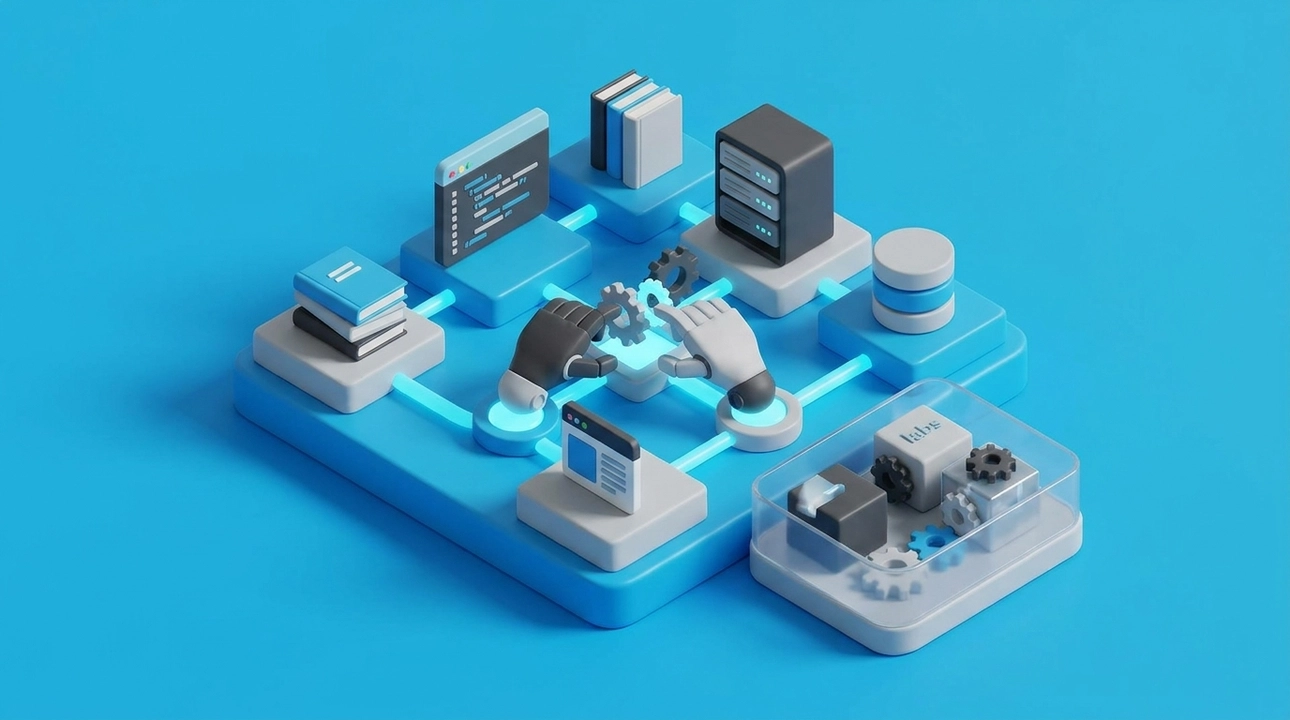
What we have done is create one consolidated environment where front-end, back-end, database, architecture, systems documentation, and product briefs all live together, including the marketing site. That last part matters more than it might sound. If you build your marketing site on Webflow or WordPress, you can absolutely make it work, and it is a totally reasonable choice early on. But if all the information about who you are targeting, what problem you are solving, and how the product works is baked into the same environment as the product itself, then your agents get quick, clean access to all of that context exactly when they need it.
The result is that when we are working on Bono, the left hand always knows what the right hand is doing. There is no translation layer. No syncing docs across systems. The context is just there.
We also have a labs folder structure that I think about a lot. Any time I am experimenting, testing a new direction, or exploring how a feature might look or behave, I create an experiment inside labs. It can access other folders in the system, so it has full context, but it stays isolated from the core product until I am confident. Once something is ready, I consolidate it into the main product. It is a simple idea, but it changes the quality of iteration dramatically. You get to move fast without the usual risk of breaking things that already work.
With Bono's 2.0 release coming, a lot of what we have been building since the beginning is finally going to be visible. We are going after the marketing technology space in a focused way, and the goal is to reinvent how marketing gets done for startups and growing teams. The architecture we built was not accidental. It was designed specifically to make that possible.
Why Services Plus SaaS Is the Competitive Moat
Here is the part that I think gets missed in a lot of the conversation about AI-native products and what it means that software is so easy to build now.
If the barrier to entry is low, and it is, then the product itself is no longer the moat. The real value of software, the raw act of building it, is approaching zero. Taste and creativity still matter. Genuine problem-solving still matters. But those things are increasingly table stakes for anyone serious about this space.
What actually creates defensibility is the combination of a software product with human-centered service. I think about this in terms of what enterprise sales and serious B2B partnerships actually require. You need account teams who build real relationships. You need focus groups and discovery work that helps you deeply understand a segment, not just survey it. You need people who can explain what is happening, translate the product's value into the language of a specific industry, and create the kind of trust that gets you into rooms where decisions get made.
SaaS alone gets you distribution. Services plus SaaS gets you depth. And depth is what turns a product into a business.
This is the direction I am thinking about for Bono and for the ventures we build at 11X. You find a segment where you can create real revenue and real meaning, and then you build something that earns the right to serve that segment through both great software and genuine human partnership. That combination is much harder to replicate than a clever product alone, because it requires operational excellence on two different dimensions at once.
What This Means for Builders Right Now
The interface shift is real, and the implications run deeper than workflow efficiency. When one person can carry full company context in a single environment, the way teams are structured, how ideas move from experiment to product, and what "building in public" even means all start to look different.
The labs folder approach is a small example of a bigger mindset. You do not have to choose between moving fast and maintaining quality if your environment is designed to separate experimentation from production cleanly. The key is that the experimentation has full context, so what you learn there is actually applicable when you fold it into the core.
The same logic applies at the business level. You do not have to choose between being a software company and having a human, service-oriented layer. The best businesses in B2B SaaS are increasingly blending both, not because it is a trend, but because it is what actually works when you are trying to win a specific segment and hold it.
I am still figuring out a lot of this in real time. Bono is the proof of concept I am closest to, and every week we learn something from the people using it that changes how I think about the architecture, the product, and the go-to-market. What I feel confident about is the direction: one surface, full context, and the human layer that makes the technology mean something to the people on the other end of it.