Voice as a Confidence Engine How Conversational AI Turns Messy Thoughts Into Clear Decisions
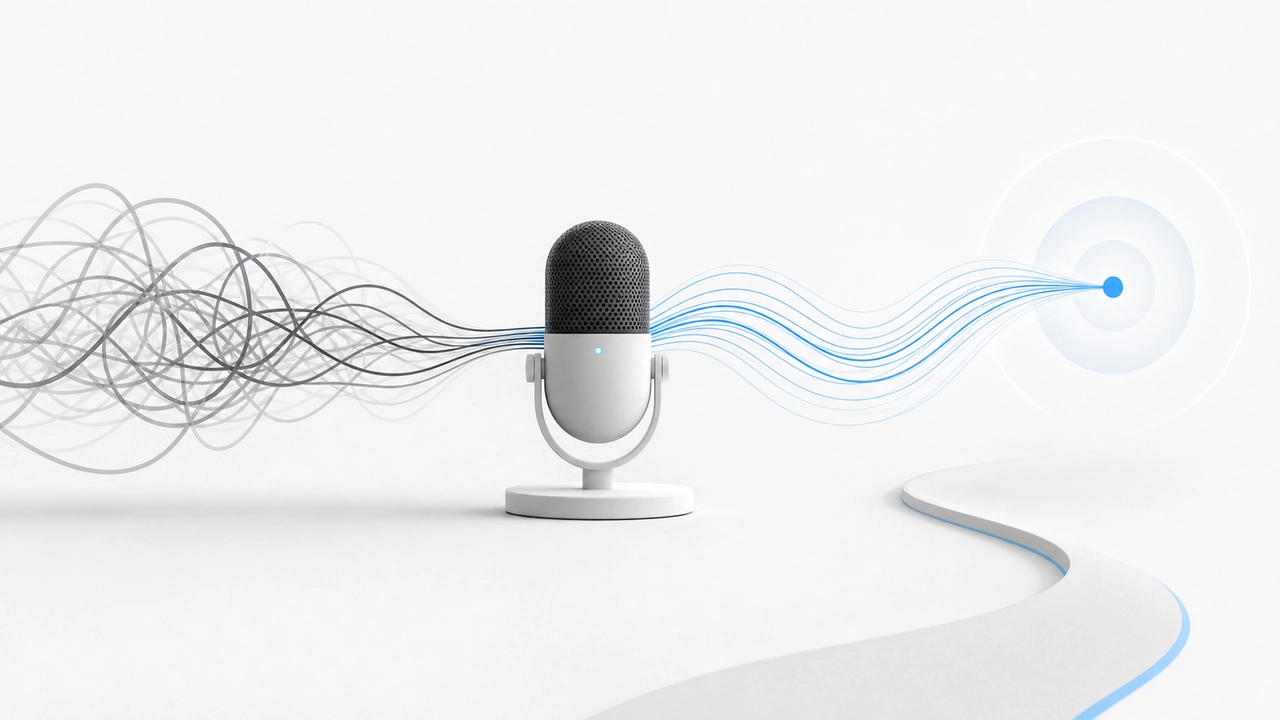
The real power of voice AI is not speed or convenience. It is confidence. When you can speak before you are ready to write, you stop waiting for perfect language and start shipping clear thinking.
In a recent strategy session with Chloe Lu and me, we were not debating features in isolation. We were mapping how voice changes behavior. What happens when conversation becomes the interface, when messy non linear thoughts are welcomed, and when an assistant can turn raw speech into structured output and then into action.
This is the behind the scenes logic that is shaping how I think about voice as a confidence engine, and why it matters for builders, operators, and anyone who has ideas but hesitates to put them out into the world.
Voice changes the psychology of creation
One of the most important points Chloe shared was deeply human. Speaking feels more natural than typing, especially for people who are not professional writers or who work in a second language. In writing, the fear is immediate. Grammar, structure, tone, and the imagined judgment of an audience can shut you down before you even begin.
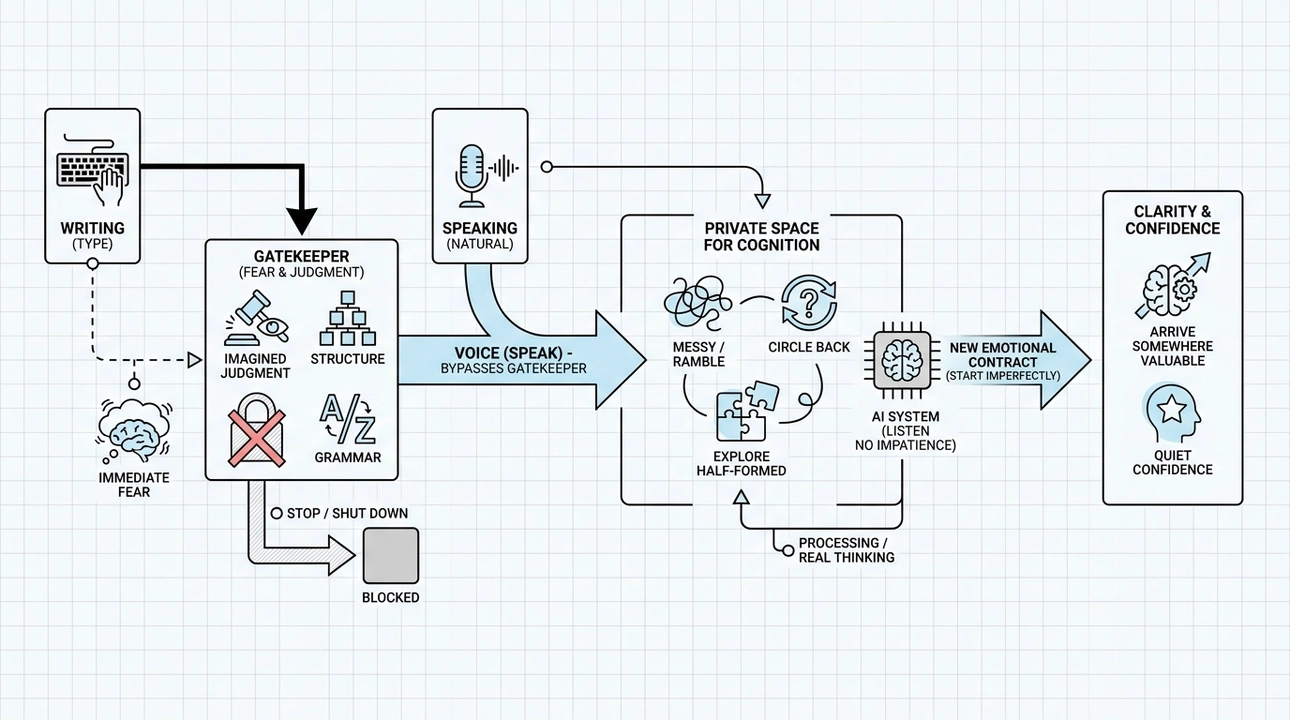
Voice bypasses that gatekeeper.
When you speak, you are allowed to be messy. You can ramble. You can contradict yourself, circle back, and explore half formed thoughts. That is not a bug. That is how real thinking works. The moment an AI system can listen without impatience and without judgment, it creates a private space for cognition. You are no longer performing. You are processing.
This is where confidence starts. Not the loud kind of confidence that comes from being certain. The quiet kind that comes from knowing you can start imperfectly and still arrive somewhere valuable.
From a strategy lens, this is the key behavior shift. Voice AI is not only a new input method. It is a new emotional contract. It tells the user, you can begin before you have clarity. The system will help you earn the clarity.
The naming problem is really a clarity problem
We also hit a subtle but important issue. The industry vocabulary is still catching up.
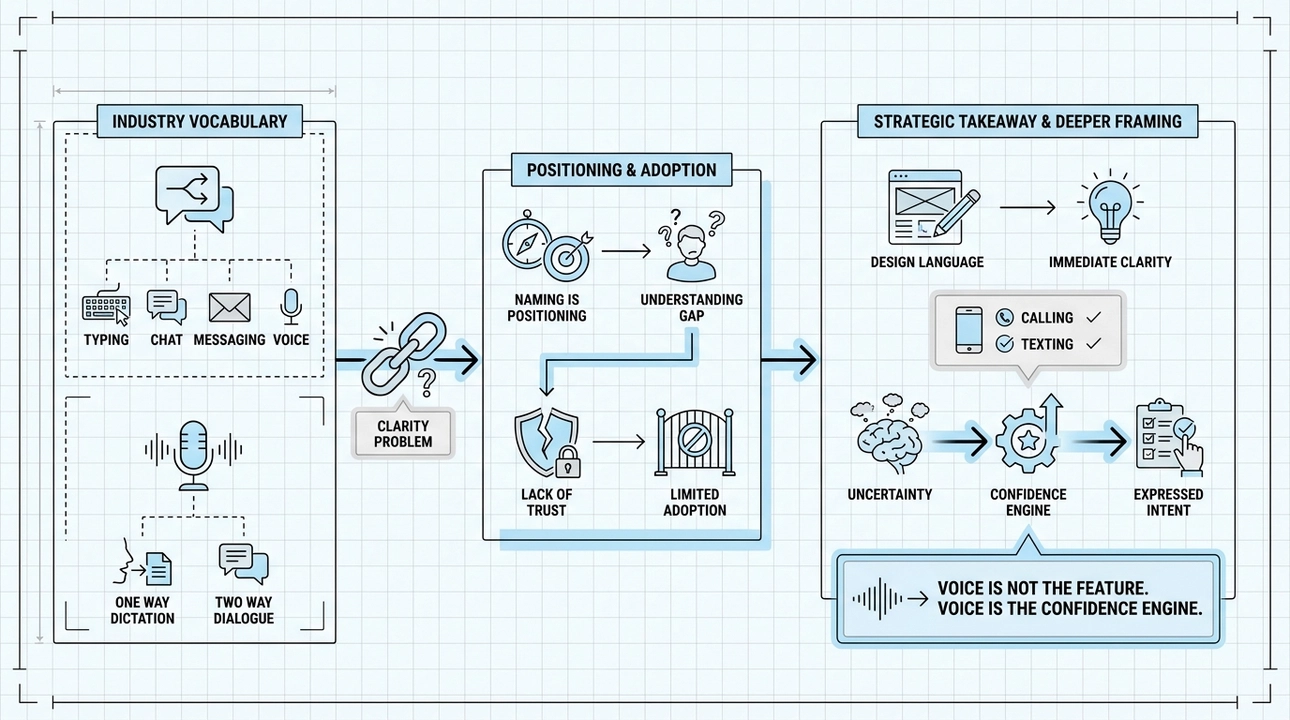
Conversational AI can mean typing, chat, messaging, or voice. Voice AI can be one way dictation or a two way real time dialogue. For people outside the space, neither term reliably communicates the experience.
This matters because naming is positioning, and positioning shapes adoption. If people do not understand what a category does, they cannot trust it. And trust is the currency of assistants.
The strategic takeaway is to design language the way you design interfaces. When you say texting or calling, people instantly know what to expect. Voice AI needs that same immediate clarity.
But there is a deeper layer here. What users are actually buying is not voice. They are buying a path from uncertainty to expressed intent.
That is why I keep coming back to this framing. Voice is not the feature. Voice is the confidence engine that turns internal thoughts into external decisions.
From correct writing to clear thinking to taking action
There is a natural progression in how tools have helped people communicate.
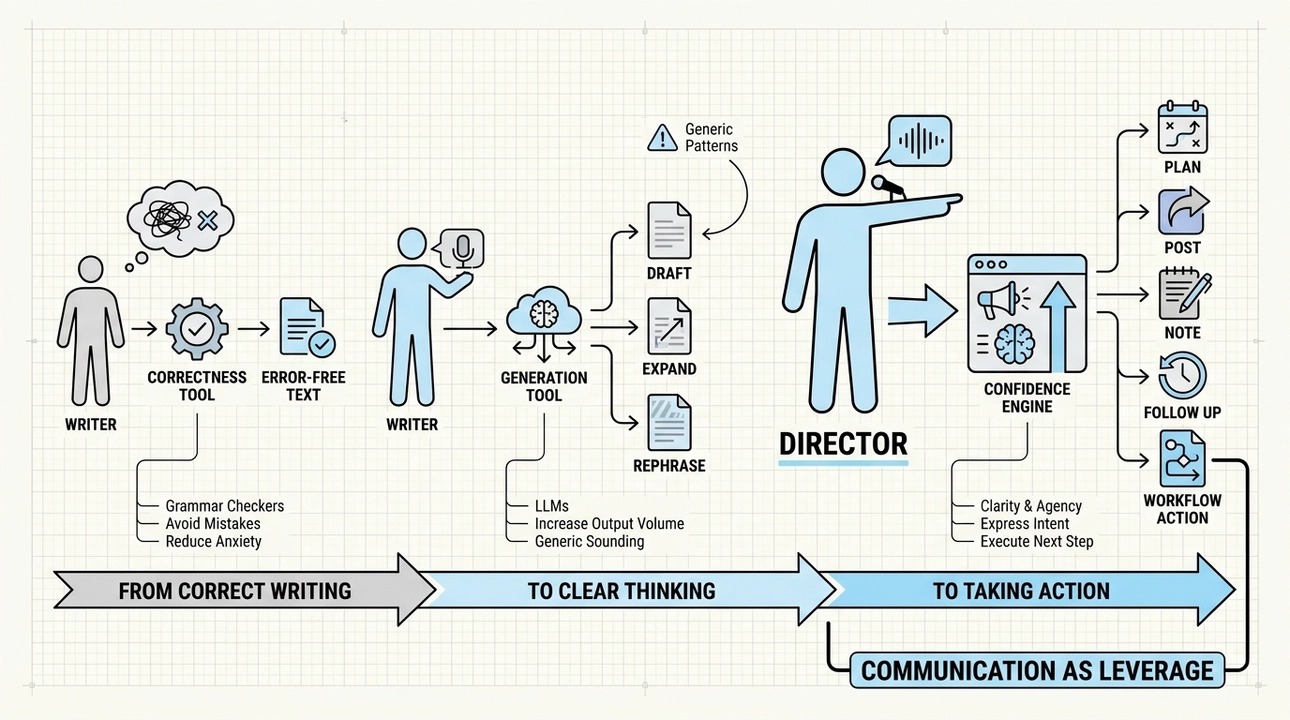
First came the era of correctness. Tools like grammar checkers made it easier to avoid mistakes. That reduced anxiety, especially for people communicating professionally in a second language.
Then came the era of generation. Large language models could help draft, expand, and rephrase. That raised output volume, but it also introduced a new problem. Generic sounding language and recognizable patterns.
Now we are entering the era that matters most for professionals. The era of clarity and agency.
Clarity means the system helps you express what you actually mean, not what the model tends to produce. Agency means the system can do something with that clarity. Not only write a piece, but help you execute the next step.
In our session, I described how I see the next layer beyond dictation. Dictation tools can clean up a ramble into text. The assistant layer goes further. It learns over time, remembers context, and can perform actions on your behalf.
This is not a small upgrade. It changes the role of the user from writer to director.
And that is where the confidence engine becomes practical.
If you can speak your intent, and the system can transform it into a plan, a post, a note, a follow up, or a workflow action, you stop experiencing communication as a chore. You start experiencing communication as leverage.
The hard truth about AI output and why it is still a win
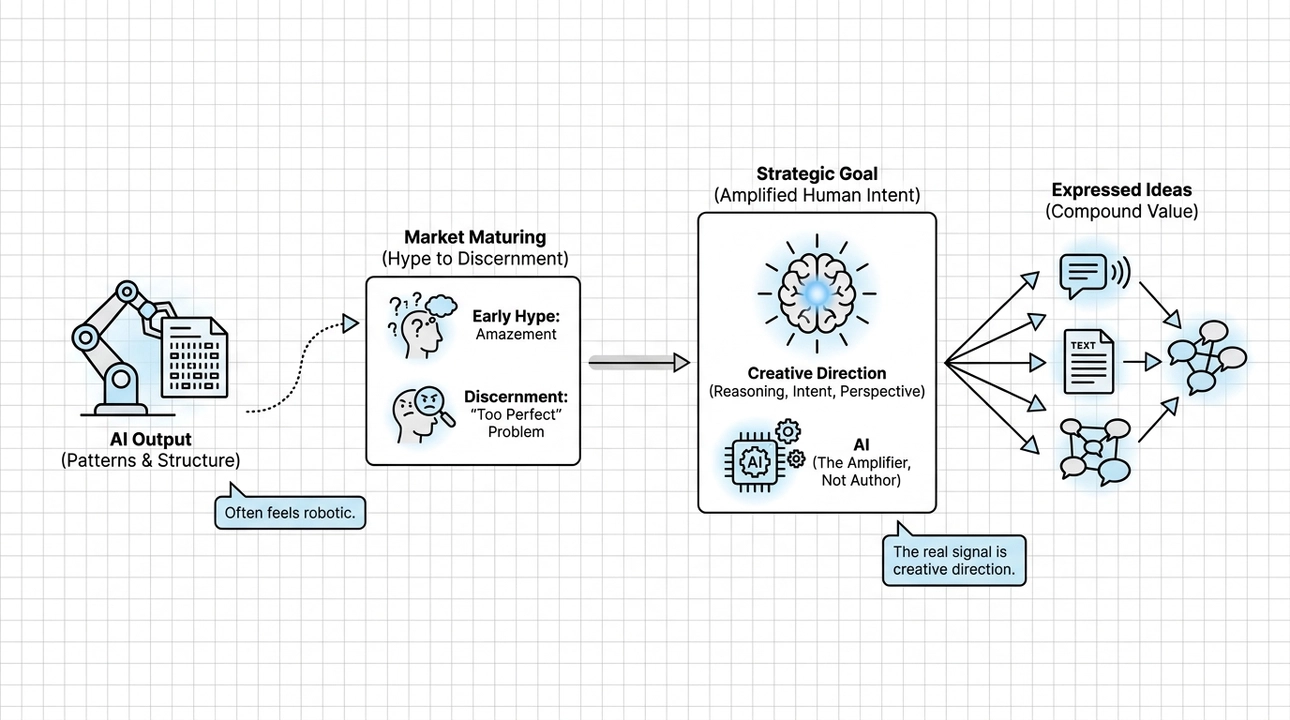
Chloe raised one of the most common industry challenges. Even when the underlying thinking is unique, AI output can still feel robotic. You can often spot patterns. You can sense the structure the model defaults to.
I agree. And I think this is the point where the market is maturing.
Early on, people were amazed that AI could produce anything at all. Then the hype created fear. Then fear created scrutiny. Now users are more discerning. They can recognize what I call the too perfect problem. When something feels overly polished, people trust it less.
Here is the strategic perspective. The goal is not to hide AI. The goal is to make human thinking more visible.
That is why transparency is becoming part of the conversation, including ideas like watermarking or disclosing AI assistance. But disclosure alone is not the full solution. The real signal is creative direction.
What mattered in our discussion is this. The value sits behind the output, in the reasoning, the intent, the perspective, and the lived experience. AI should be the amplifier, not the author.
If voice helps you speak what you actually think, you will get more original material into the world. Even if the final formatting still needs improvement, the engine has already done its job. It has moved you from silent to expressed.
And expressed ideas compound.
Building responsibly when the interface is human
We also talked about the polarized reactions to AI. On one side, pure hype. On the other, pure cynicism. I align with the builders in the middle. AI is not going to vanish, and it also should not be worshipped.
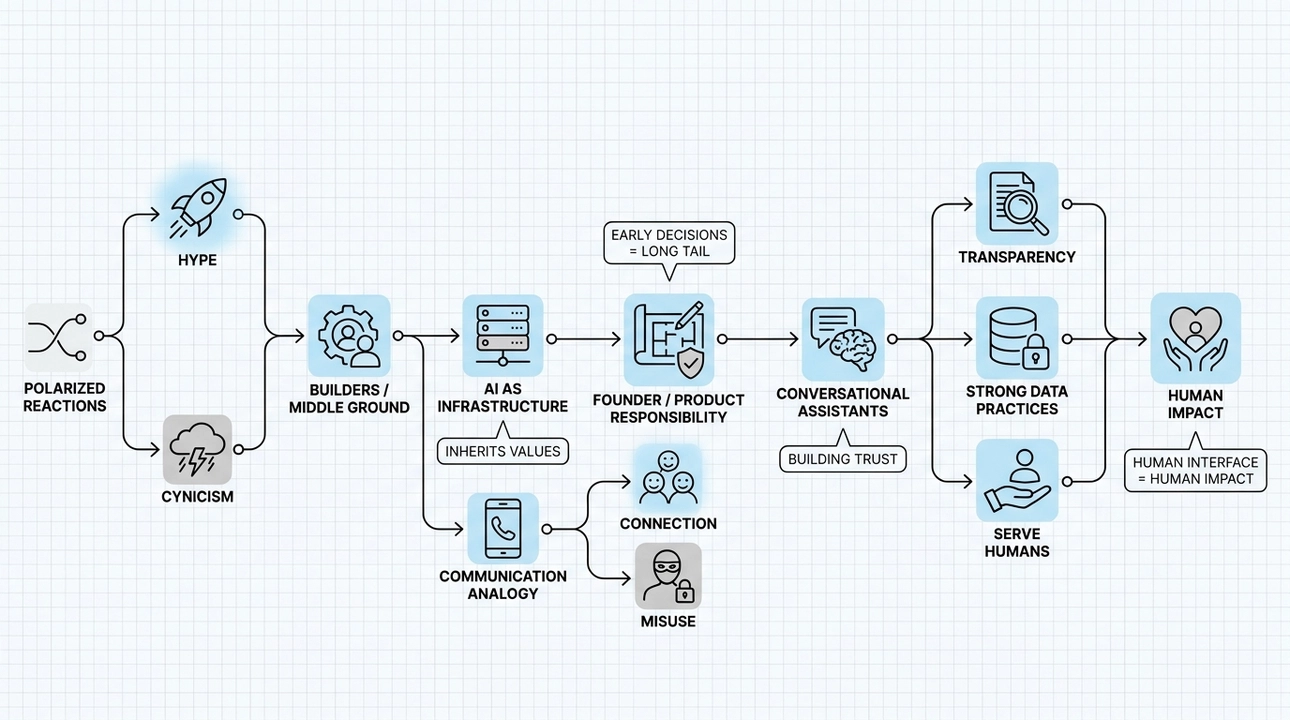
It is infrastructure. And infrastructure inherits the values of the people who build it and the people who use it.
We used a simple analogy. Communication technology can connect families, and it can also enable scams. The same will be true for AI assistants, especially as voice becomes more natural and emotionally resonant.
This creates a real responsibility for founders and product teams. A few decisions made early can have long tail consequences, just like we saw with social platforms.
My view is direct. If we are building assistants that feel conversational, we are building systems that people will trust with their private thoughts. That demands transparency, strong data practices, and a product philosophy that serves humans rather than replacing them.
Because the more the interface feels human, the more the impact becomes human too.
Closing thought Voice is the start line, not the finish line
I left that session feeling even more convinced that voice is not simply a modality shift. It is a mindset shift.
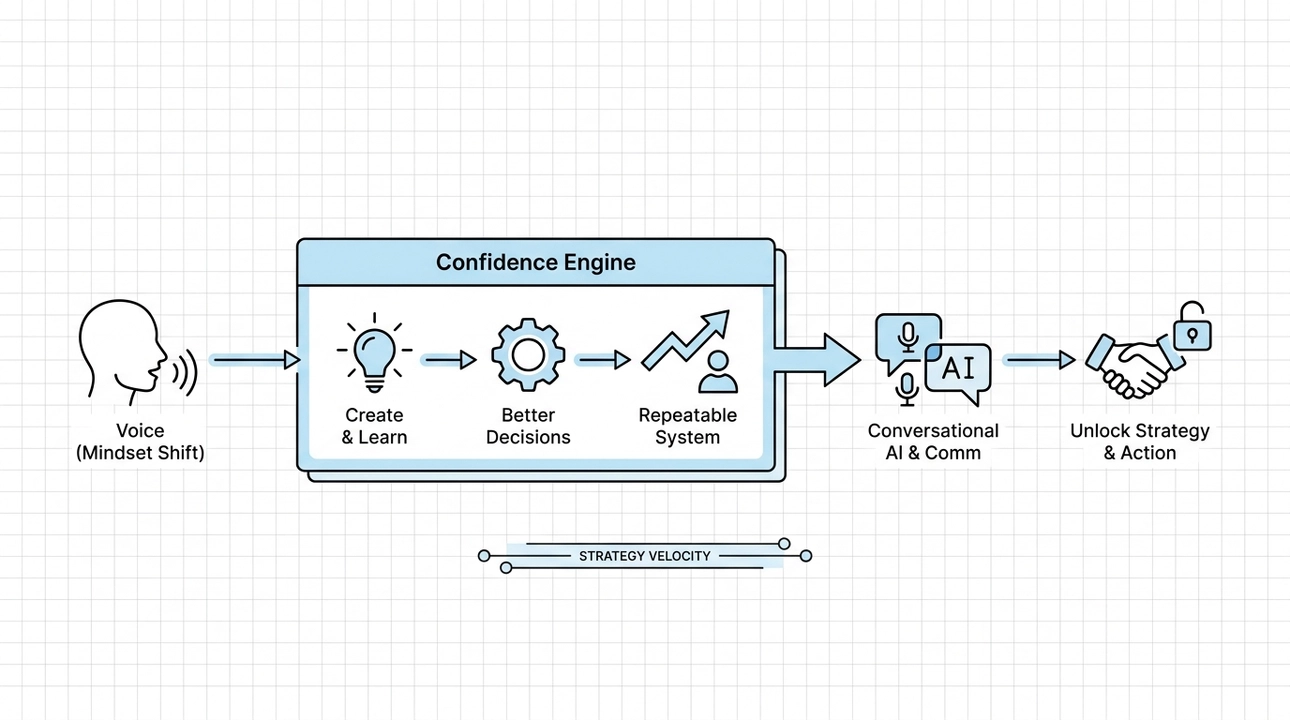
When you can talk through ideas without fear of being judged, you create more. When you create more, you learn faster. When you learn faster, you make better decisions. And when decisions become easier, confidence stops being a personality trait and becomes a repeatable system.
That is what I mean by voice as a confidence engine.
If you are building in voice or conversational AI, or you are a founder or operator trying to help your team communicate and execute faster, I would love to compare notes. Reach out and tell me what you are trying to unlock. The strategy is moving quickly, and the people who win will be the ones who turn clarity into action.