What Building in Voice AI Actually Looks Like: Four Problems Nobody Warns You About
Voice AI is having a moment. New models are dropping constantly, demos are impressive, and the pitch decks are bullish. But building in this space day-to-day looks very different from the headlines. There are real gaps, real constraints, and a set of problems that only become visible once you are deep in the product work. Having spent time building voice agents for content marketers with Bono AI and working across other industries and segments, these are the four things that matter most right now and that most builders are still quietly wrestling with.
The Human Feel Is Harder Than It Looks
The conversational nature of voice does not yet have a true human element figured out. This is the thing that surprises people most when they start building seriously in this space.
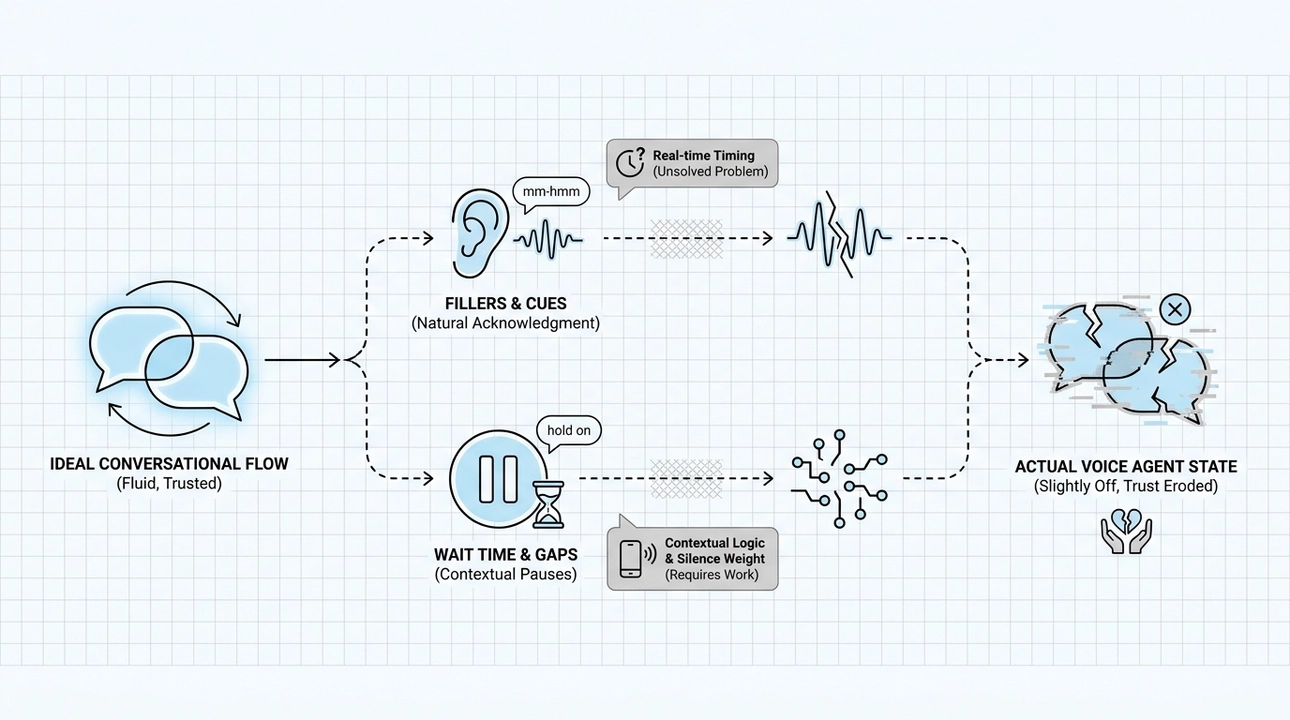
There are two pieces to it. The first is fillers and natural acknowledgment cues: the small "mm-hmm," the well-timed nod, the verbal signal that you are listening without interrupting. Early models are starting to experiment with this, but knowing when to add those cues at the right moment in a real conversation is still a largely unsolved problem.
The second piece is wait time and natural gaps. A real-time model does not truly know what to do when someone says "hold on a minute." There is no proper context built around a pause like that. It becomes even more complicated in phone-calling use cases, where silence carries a different weight and the expectation of response timing is more sensitive. Building logic around this kind of conversational breathing requires work that goes well beyond the base model.
These are not small cosmetic issues. They are the difference between a voice agent that feels fluid and one that feels just slightly off, which is often enough to erode trust in the product entirely.
Memory Across Multiple Conversations
Single-call performance is one problem. Multi-call memory is a different problem entirely, and it is where things get genuinely complex.
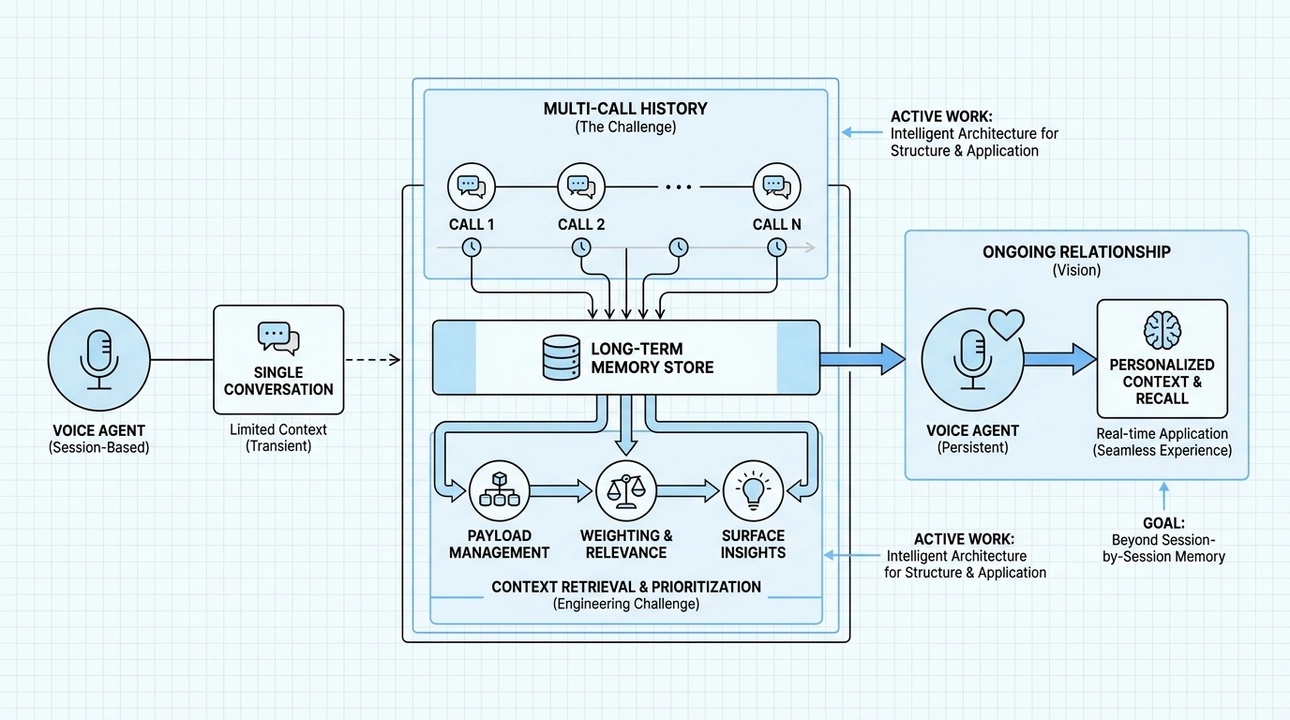
If a voice agent has one conversation with someone, it can work well. But real use cases often involve five, ten, or more calls with the same person over time. Building an agent that actually knows someone across that history, that can recall earlier context, surface background insights, and remind someone of things that matter to them, requires more than just connecting a vector database and calling it done.
The payload problem is real. If you are storing all past conversations and trying to surface the right context at the right time, deciding what to retrieve and how to prioritize it becomes a significant engineering challenge. How do you split recent conversations from older ones and weight them appropriately? How do you surface what is relevant without overwhelming the model with irrelevant history?
This is active work. The vision is an agent that holds a real ongoing relationship with a user, not just a session-by-session memory. Getting there requires thoughtful architecture around how memory is structured, retrieved, and applied in real time.
Real-Time Action During a Conversation
Post-call actions are relatively straightforward. You can scan a transcript, extract what was discussed, and trigger workflows from there. But there is a different category of things that need to happen in the middle of a conversation, and that is where tool calling becomes critical.
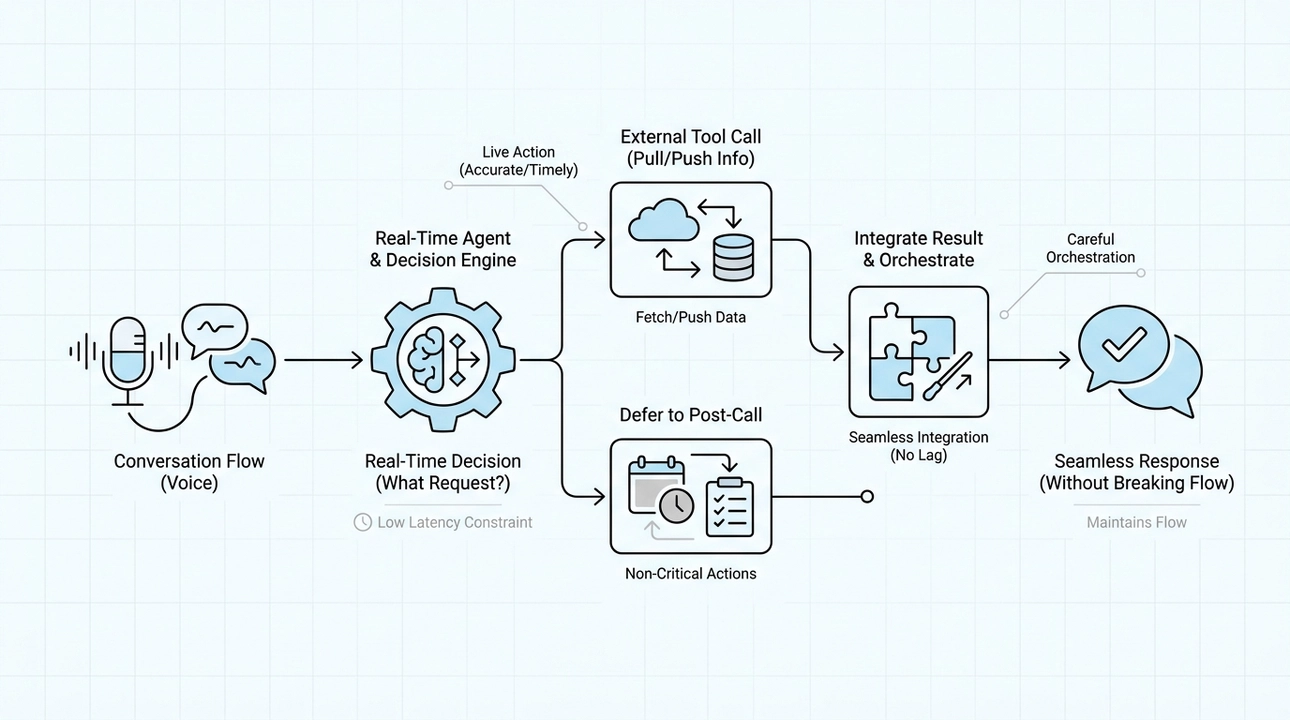
As a conversation unfolds, the agent needs to be able to decide what kind of request is being made, call an external tool or service in real time, and bring the result back into the conversation without breaking the flow. This could mean pulling in additional information to answer a question accurately, or pushing information somewhere based on what was just said.
The challenge is that this all needs to happen without creating a noticeable lag or interruption in the conversation itself. Tool calling in real-time voice contexts is a much tighter constraint than in text-based agents where latency is more forgivable. Getting this right requires careful orchestration and a clear sense of which actions are worth attempting live versus deferring to post-call.
Latency and Infrastructure Geography
Latency has come a long way. At a production scale, it is genuinely possible to build voice agents that feel responsive and natural. But it is not a solved problem, and the solution is not just about picking the right model.
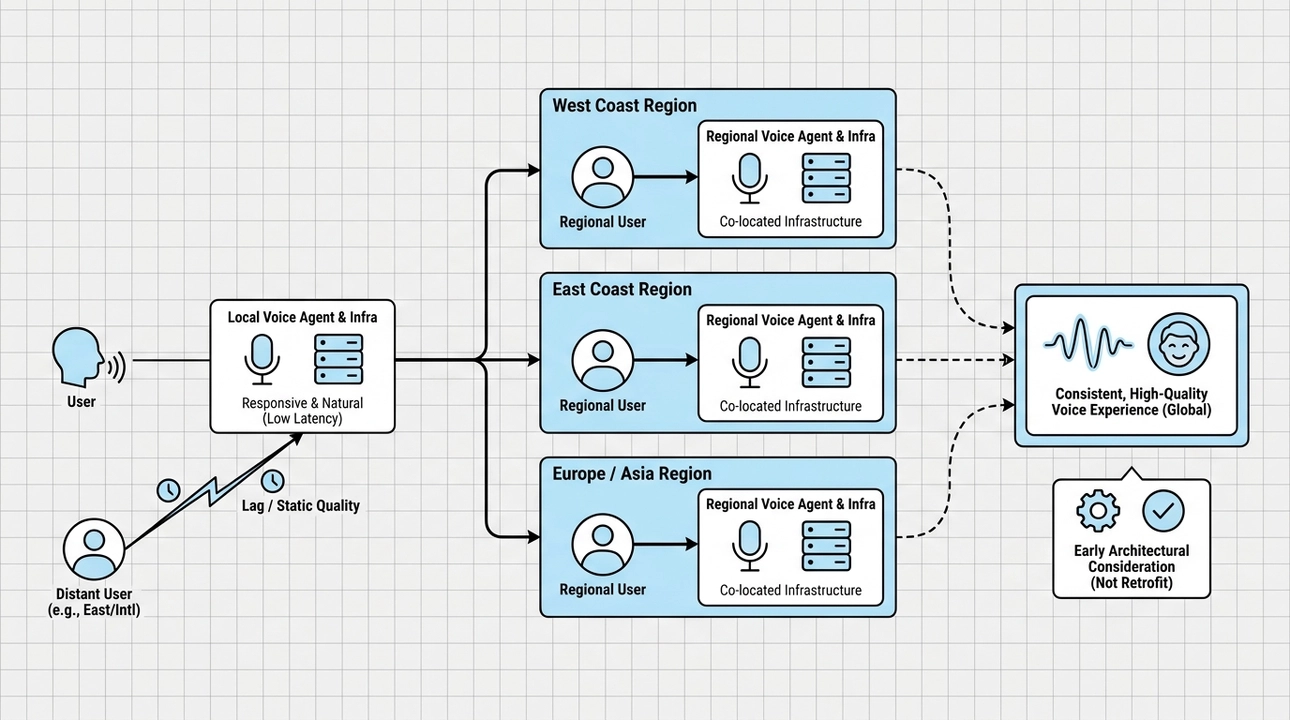
If the infrastructure is not deployed close to the users, there is a static, slightly-off quality to conversations that users feel even if they cannot name it. This is not just a backend problem. The voice systems themselves need to be co-located in the same region or data center as the users, not just the application layer.
Running most customers on the west coast means most infrastructure lives on west coast servers. But as the user base expands east, into Europe, or further into Asia, that infrastructure needs to follow. Splitting deployments by locality is not optional if the goal is a consistent, high-quality voice experience. A multi-tier communication chain spread across distant data centers will introduce lag in ways that degrade the entire experience.
This is the part that builders often do not think about until it becomes a problem. Voice infrastructure geography deserves early architectural consideration, not a retrofit.
Where This All Points
Voice AI is real and it is ready enough to build on. But the gap between a working demo and a voice product that genuinely earns user trust is filled with these exact kinds of problems: the conversational feel, the memory architecture, the real-time action layer, and the infrastructure decisions that most people treat as an afterthought.

The builders who are going to get this right are the ones willing to sit with these constraints, think carefully about how to solve them, and resist the urge to ship something that only works under ideal conditions.
This space is moving fast. Would genuinely love to connect with others who are building in voice AI and working through these same problems. How are you approaching memory across conversations? What are you doing about real-time tool calling latency? The honest, practitioner-level conversations happening in this space are where the real progress is being made.