Why the Next Wave of AI Agencies Will Be Built on Conversation, Not Code

There is a version of the AI agency story that most people are telling right now, and it goes something like this: assemble the right tools, wire together the right models, automate the right workflows, and the product sells itself. It is a compelling pitch. It is also the wrong frame.
The real differentiator in the next wave of AI agencies will not be the sophistication of the tech stack. It will be the ability to design systems that can hold context, negotiate intent, and act on behalf of someone through natural, ongoing dialogue. The agencies that figure that out early will not just outcompete the ones that do not. They will define what the category even means.
The Stack Is Not the Moat
For a long time, technical complexity was a reasonable proxy for value. If you could build something that others could not, the build itself was defensible. That logic is eroding fast.
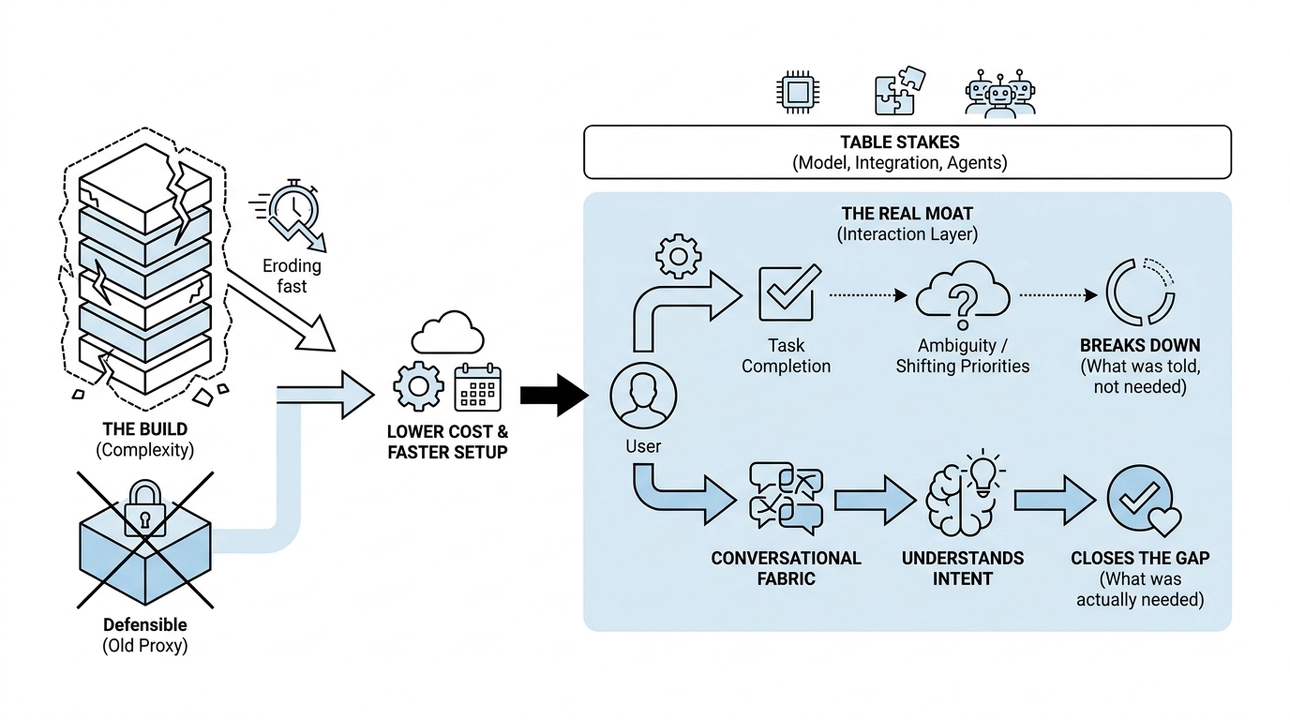
The cost to stand up capable, production-ready AI systems has dropped dramatically. What used to require a specialized team and months of runway can now be scaffolded in days. This is genuinely good news for the industry, but it also changes the competitive question entirely. If the build is no longer the barrier, then what is?
The answer is not the model choice, the integration depth, or the number of agents in the pipeline. Those are table stakes. The real moat is understanding how to design the interaction layer, the conversational fabric through which a system understands what someone actually wants, not just what they typed.
Most agentic systems today are built around task completion. Give the agent a goal, define the steps, let it execute. That works well in narrow, well-defined contexts. But the moment a use case involves any ambiguity, shifting priorities, or a user who is not sure exactly what they want, pure task completion breaks down. The system does the thing it was told to do, not the thing that was actually needed. Conversation is the mechanism that closes that gap.
Conversation as Infrastructure
When thinking about conversational AI seriously, not just as a chat interface bolted onto an existing product, but as a design philosophy, it reframes how agentic systems should be built from the ground up.
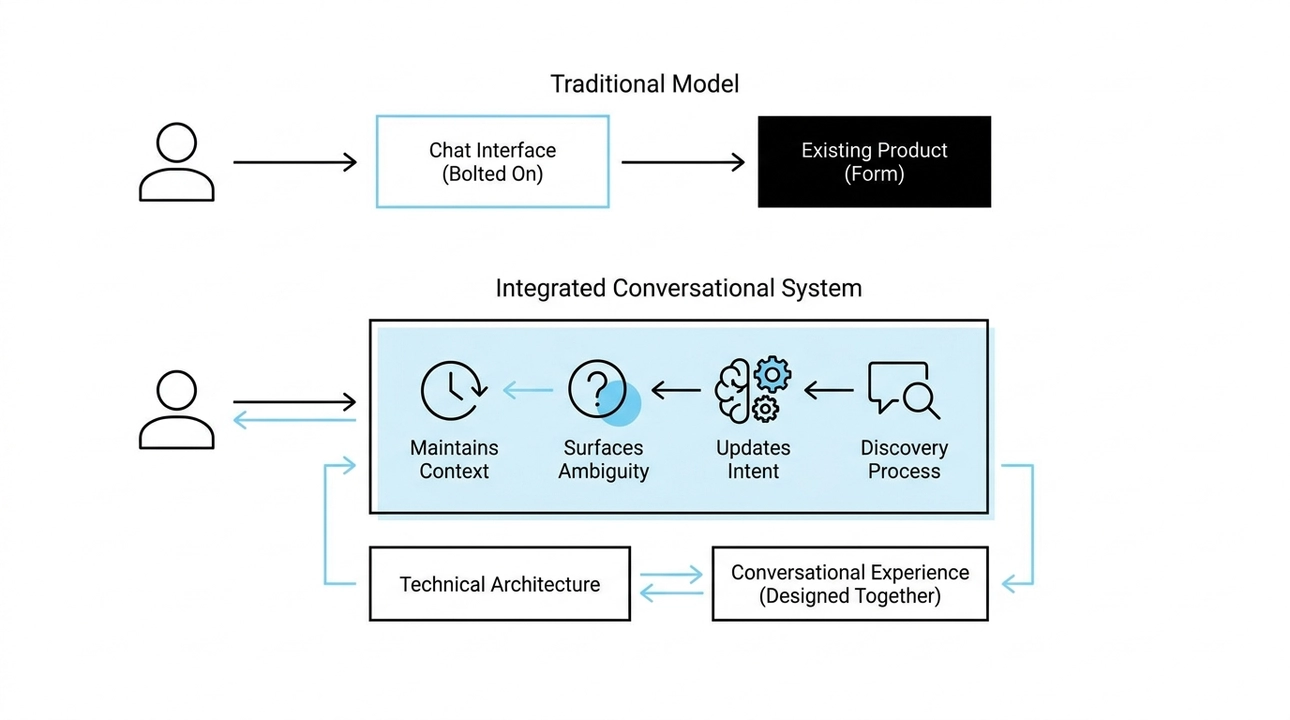
A conversational system is not just one that responds to natural language. It is one that maintains context across an interaction, surfaces ambiguity instead of guessing past it, and updates its understanding of intent as the dialogue evolves. That is a fundamentally different architecture than a form with a submit button, even when that form is powered by a language model underneath.
The implications for agency work are significant. Clients do not always know how to specify what they need. The best agentic systems are not the ones that wait for perfect input before acting. They are the ones that can participate in the discovery process, ask the right clarifying questions, propose direction, and course-correct in real time. That sounds like a feature. It is actually a design discipline.
This is where the overlap between agentic systems and conversational design becomes interesting and underexplored. Most people building in this space are coming from either the engineering side or the product side, but not from a place that deeply integrates both. The agencies that will matter are the ones developing that integrated fluency, where the technical architecture and the conversational experience are designed together, not bolted together after the fact.
What Building in This Category Actually Teaches You
Standing up an AI agency while the category is still being defined is a particular kind of challenge. There are no established playbooks, no consensus on what good looks like, and enough hype in the market that separating signal from noise is its own full-time job.

A few things become clear quickly when you are in it. The first is that client education is a core deliverable, not a precursor to the real work. Most organizations that want to "do something with AI" have not yet articulated what problem they actually want to solve. The conversational capability of the agency matters here before any system is ever built. The discovery process itself is part of the product.
The second is that the most valuable agentic systems are the ones that make a human better at something, not the ones that replace a step entirely. The framing of automation versus augmentation has been discussed to death, but in practice it still gets ignored constantly. Systems designed to augment tend to surface conversation naturally, because they are built around a human in the loop who needs to understand, redirect, and refine. Systems designed to purely automate tend to optimize for removing that human, and then break in unpredictable ways when edge cases arrive.
The third observation is that trust is earned through the quality of the interaction, not the quality of the output alone. This is counterintuitive to engineers, who tend to optimize for correctness. But a system that is right and explains nothing, confirms nothing, and surfaces no reasoning will erode trust over time. A system that is occasionally wrong but is transparent, recoverable, and easy to redirect will earn more confidence. Conversation is the vehicle for building that transparency into the product from the start.
What This Signals for the Road Ahead
The AI agency category is still in the stage where being technically credible is enough to win work. That window is narrowing. As more players enter the market and the cost of building continues to compress, the differentiator will shift to something harder to replicate: the ability to design genuinely useful, contextually aware, conversationally coherent systems that people actually trust to act on their behalf.
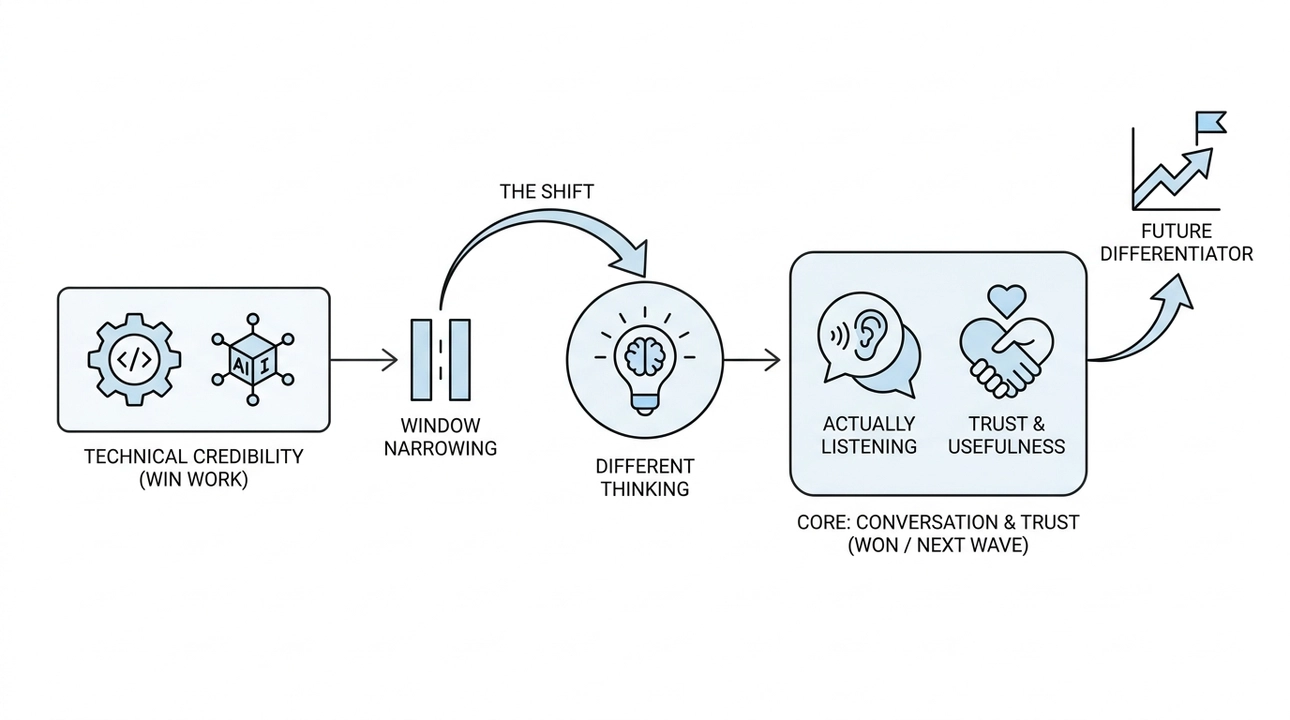
That requires a different kind of thinking than most agencies are investing in right now. It requires treating conversation not as a nice-to-have interface choice but as the core of how agentic systems understand and serve the people using them.
The next wave of this industry will not be won by whoever has the most capable models or the most automated pipelines. It will be won by the teams that understand how to make a system feel like it is actually listening. That is the harder problem. It is also the more interesting one.