Horizontal vs. Specialized AI Agents: Why Depth Beats Breadth in the Go-to-Market Stack

There is a race happening right now in the AI agent space, and most of the loudest players are running in the wrong direction.
The big horizontal platforms are adding capabilities as fast as they can ship them. General-purpose agents that can write, search, summarize, plan, code, and schedule. The pitch is breadth: one surface, everything covered. It is a reasonable product strategy, and some of these tools are genuinely impressive in scope.
But breadth is not the same as usefulness. And for most of the people actually trying to build a go-to-market motion with AI, the horizontal layer keeps falling short in the same ways.
Why Horizontal Agents Plateau
The issue is not intelligence. The issue is context. A general-purpose agent does not know your business, your audience, your tone, or your positioning history. It has no memory of what you said to a prospect last quarter. It cannot pull your analytics and cross-reference them with what just went live. It is working without the scaffolding that makes the output actually usable.
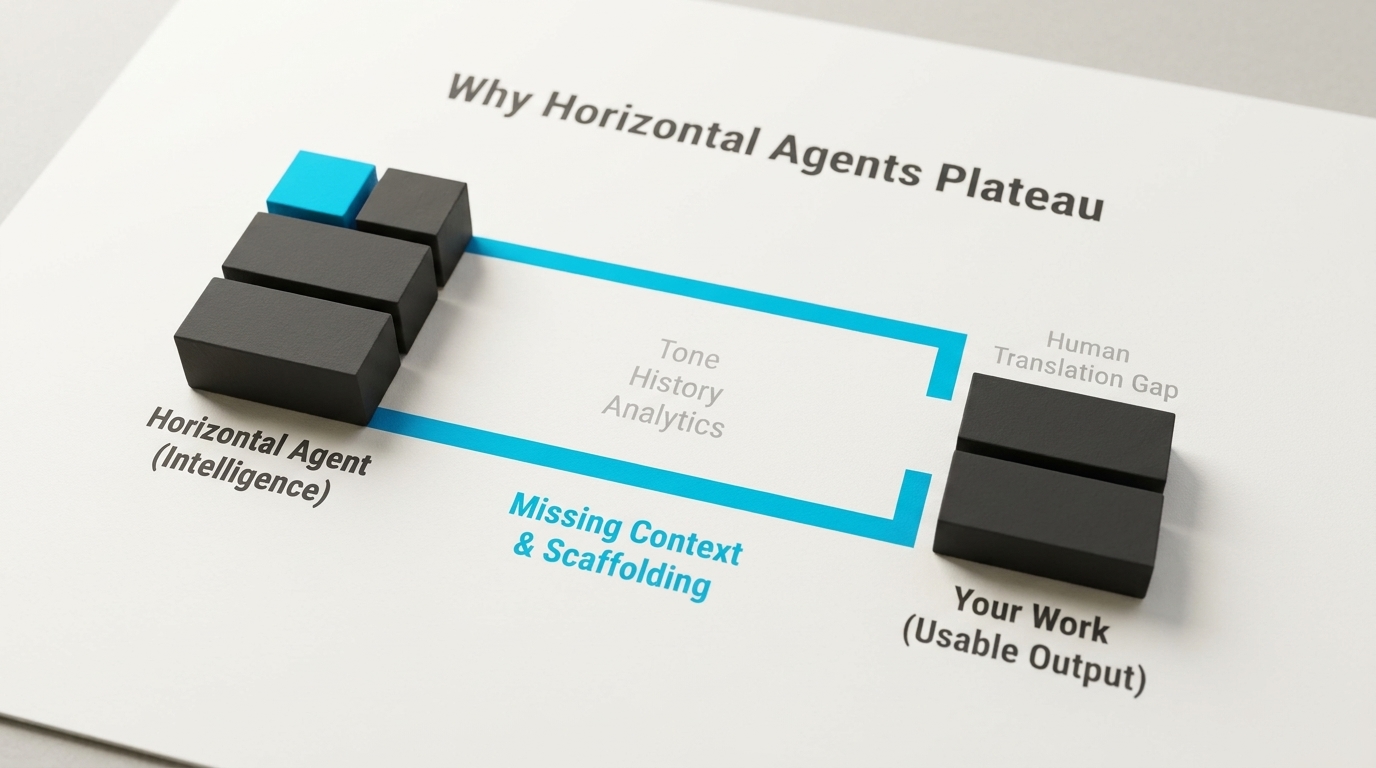
What you end up with is a capable tool that still requires significant human translation between its output and your actual work. You still have to edit for voice. You still have to fact-check for relevance. You still have to decide what to do with what it generates. The automation is there, but the intelligence about your specific situation is not.
This is not a failure of the technology. It is a structural limitation of building wide instead of deep.
The Case for Specialization
A specialized agent can be built around a single domain and do that domain far better than any horizontal tool ever will. Not because the underlying model is smarter, but because the context is richer, the integrations are tighter, and the training surface reflects the actual use case.
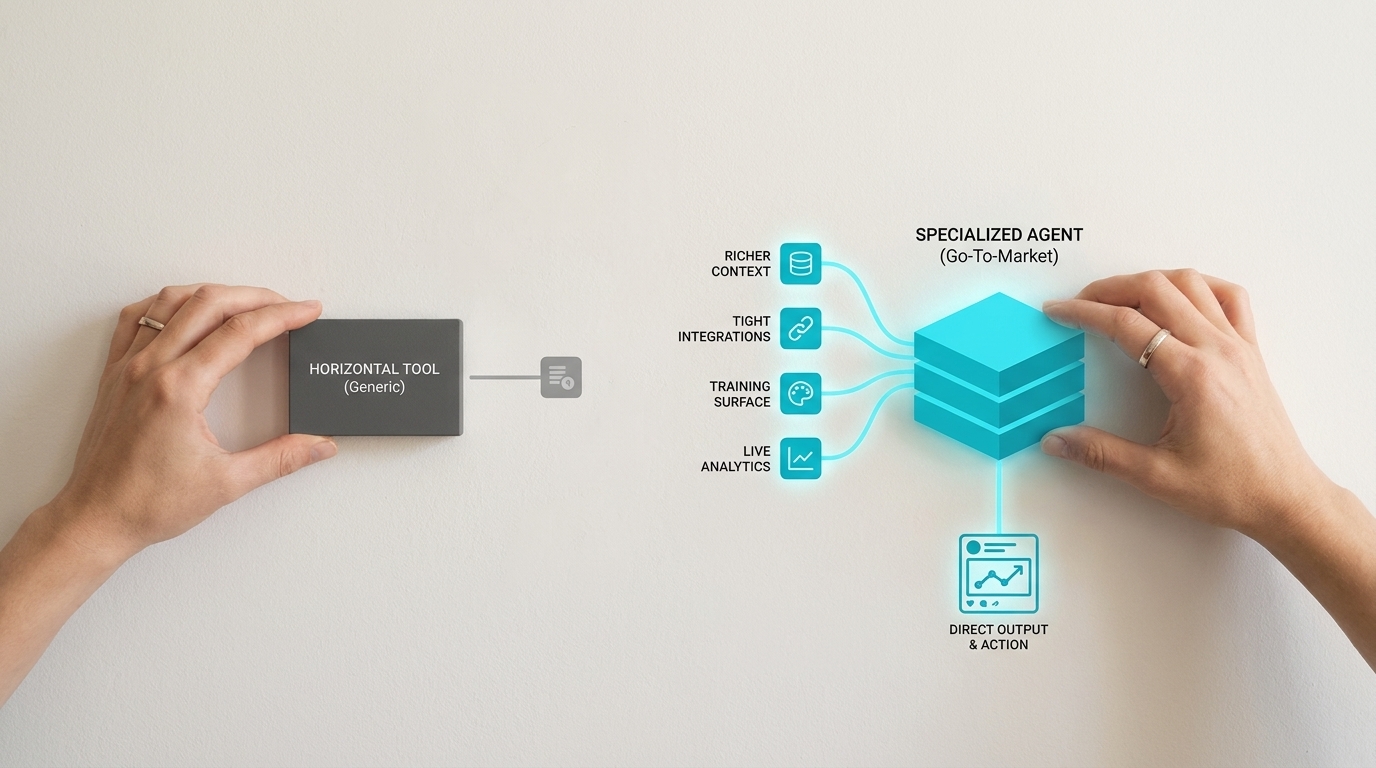
Take go-to-market as an example. A truly specialized marketing agent should understand a business at the level a great marketing hire would on day sixty, not day one. It should know the positioning, the customer language, the past campaigns, what worked, what did not. It should have live access to analytics so it is not operating on stale assumptions. And it should connect directly to the social and publishing ecosystem so that the output has somewhere to go without a human in the middle translating between tools.
That is a very different thing from a general-purpose agent you prompt with "write me a LinkedIn post about our product launch."
The integration layer is where this gets genuinely interesting. An agent that can access real-time data and take actions across your stack is not just a writing tool or a research tool. It is closer to an operating layer for the go-to-market function itself. It surfaces insights, drafts content, pushes it through approval, publishes it, and loops the performance data back into the next cycle. That whole workflow, running through a single specialized surface.
Voice as the Interface That Makes Specialization Work
Here is the part that often gets missed in the horizontal versus specialized debate: even the best-designed specialized agent is still friction if the interface requires you to sit down and type out detailed prompts.
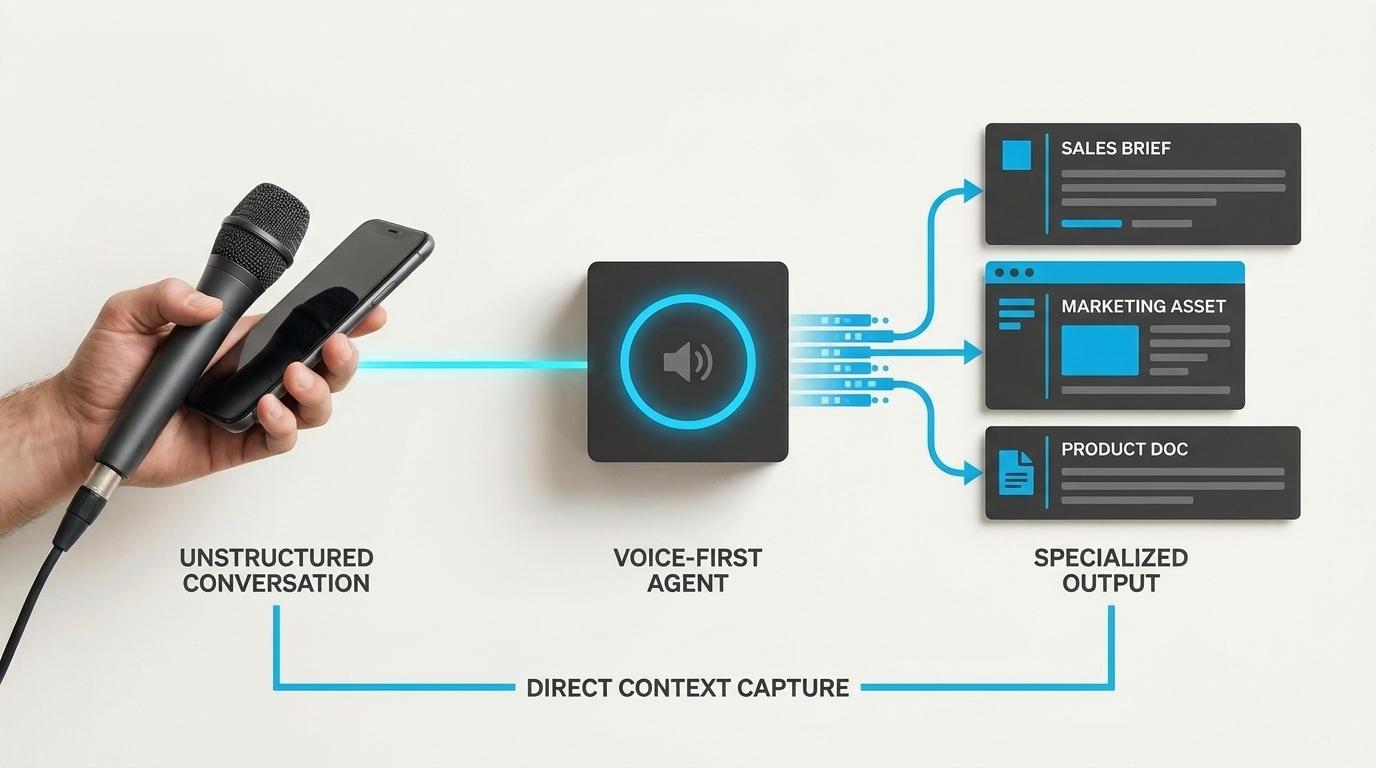
Voice changes this. Not in a gimmicky way, but in a structural way. When the input is conversation, the bar for getting something into the system drops to nearly zero. You talk through your thinking, the agent captures the context, asks what it needs, and handles the downstream work.
This is especially important for go-to-market, where the best material almost always starts as a conversation, a sales call, a team debrief, a founder explaining their product to someone new. That is where the clearest thinking tends to live, not in a brief someone eventually gets around to writing.
A specialized marketing agent built on a voice-first interface means your best thinking goes in directly, without losing anything in the transcription from spoken to written to prompted. The conversation-first approach is not just a UX preference. It changes what actually makes it into the content.
The vision being built toward at Bono is exactly this: a marketing agent that understands a business and its voice deeply, connects to the full social and analytics ecosystem, and runs on voice as its primary interface. Not to replace thinking, but to make sure the thinking that exists actually gets out into the world, in the right form, at the right cadence.
Where This Goes
The horizontal agents will keep improving. Some of them will get better at personalization, better at integrations, better at understanding context over time. That is fine. The question is not whether they catch up on features. The question is whether a general tool that does everything can ever serve a specific use case as well as one built specifically for it.
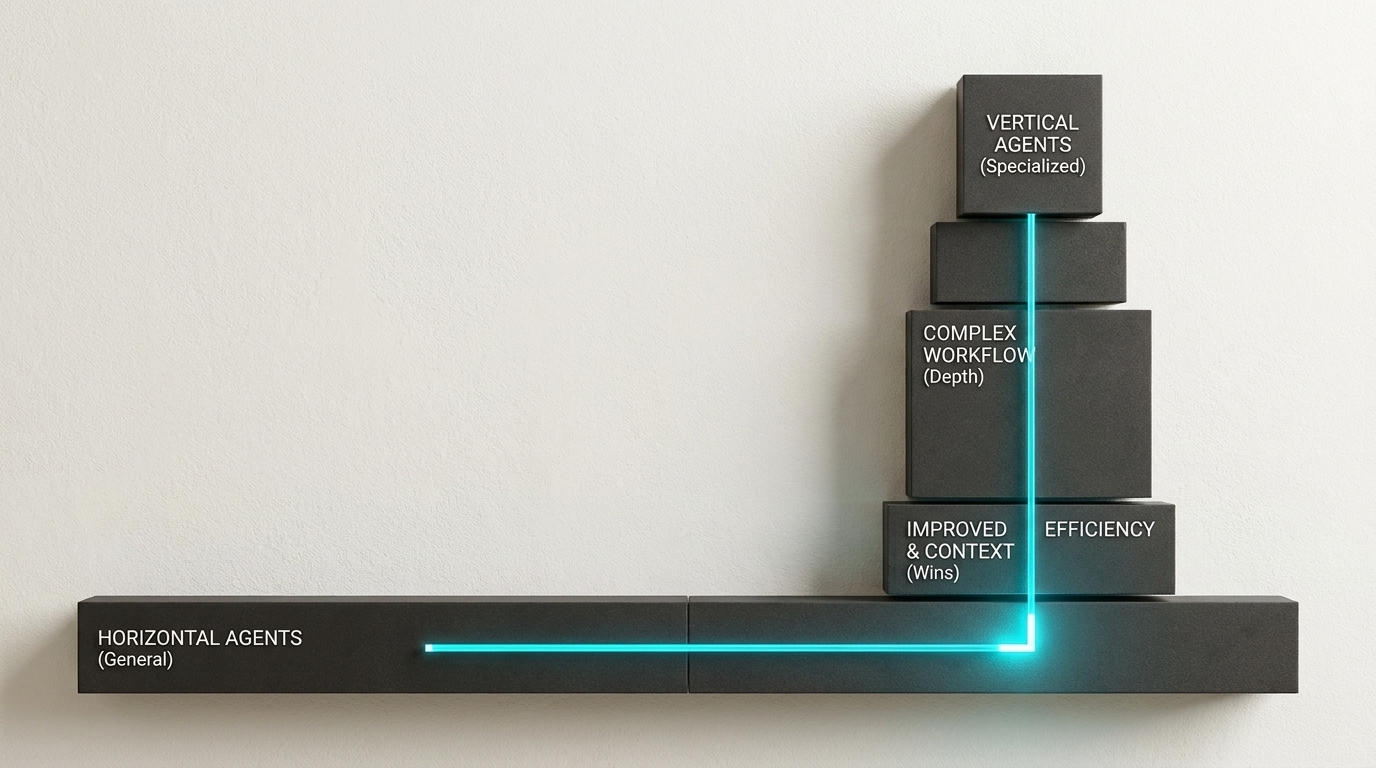
History in software says no, at least not at the high end of any domain. Vertical SaaS consistently outperforms horizontal in complex workflows not because it is smarter, but because it is shaped to fit. The same logic applies to agents.
The teams that move now on building or adopting specialized agents for their specific go-to-market functions will not just be more efficient. They will be working with a system that understands them, not one they have to constantly re-explain themselves to. That compounding familiarity is worth more than any feature list comparison between tools.
Depth wins. The breadth play is a starting point, not a destination.