I Build Bono by Talking to Bono: How Conversational Loops Are Replacing the Product Roadmap
Earlier today I gave product feedback by having a phone call. Not a Slack thread. Not a Notion doc. Not a Loom recording queued up for someone to watch later. A conversation, in real time, where I talked through what I wanted, and by the time the call ended, the pipeline had already started moving.
That is not a demo. That is how we actually build Bono right now.
And I think it signals something bigger than a workflow tweak. I think it points to where product development is headed for anyone building in this space: conversation becomes the primary input, and everything downstream, the planning, the brief, the build, the review, gets generated from that.
The Flywheel That Built Itself
Here is a concrete example. Up until recently, Bono could help you create long-form posts, capture ideas, and write in your voice. But it had no ability to research a person or company mid-call, or take actions in real time during a conversation.
I wanted that. So I said so. On a call. To Bono.
Within about a day, real-time actions during a conversation had been scoped, built, and pushed to dev for testing. The feedback loop was not a ticket in a backlog or a note in a spec doc. It was a live conversation that got captured, summarized, turned into a product brief, handed to Cursor for implementation, and then reviewed before shipping. The whole thing ran through the same pipeline that Bono uses to turn founder conversations into published content.
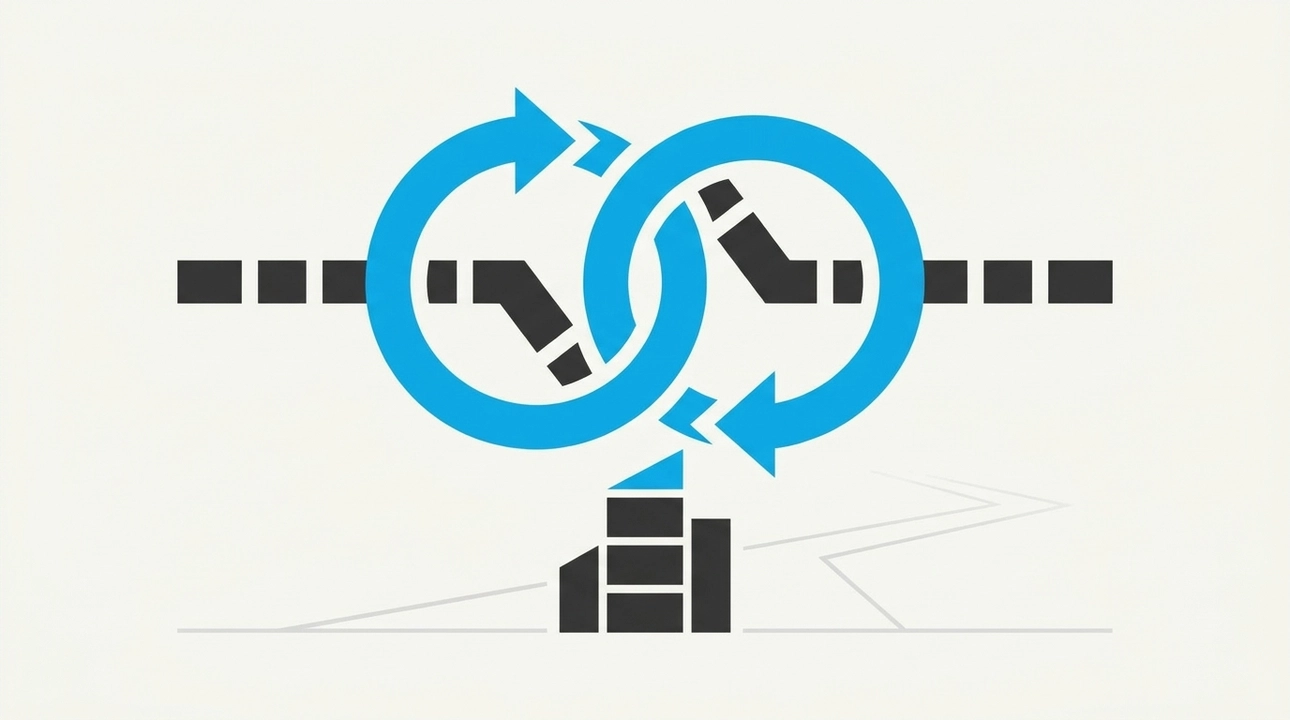
That is the flywheel. The product that captures and structures ideas is itself built through captured and structured ideas. It feeds itself.
What makes this different from just "dogfooding" is the input method. When you write down feedback, you are already editing. You are deciding what is worth including, how to phrase it, whether it sounds reasonable enough to put in a doc. You filter yourself before the idea has a chance to breathe. Voice does not work that way. On a call, things come out as they form. You say the half-baked version, and then you say the more developed version three sentences later, and the agent catches both. The best ideas I have had for this product showed up mid-sentence, not at the end of a structured brainstorm.
What This Changes About the Build Cycle
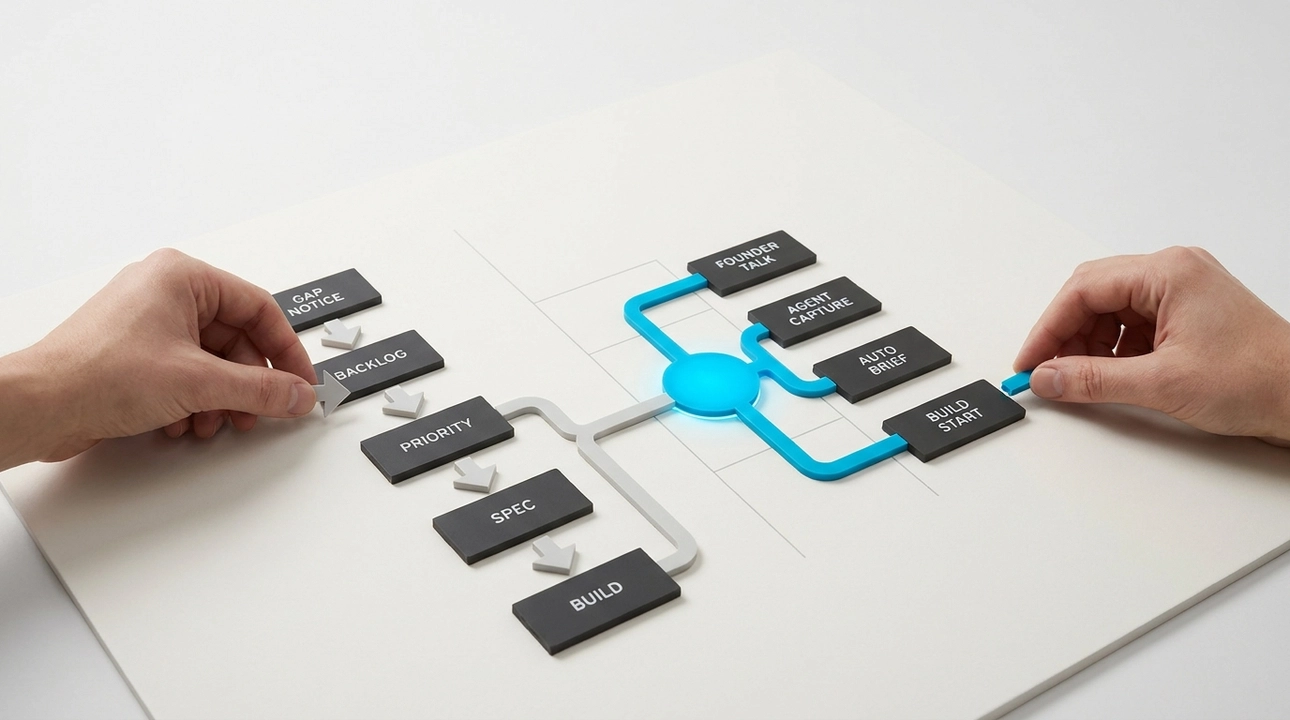
Traditional product development has a shape. Someone notices a gap. They write it up. It goes into a backlog. Someone prioritizes it. Someone specs it. It gets built. The whole thing is slow by design because each handoff requires translation, and translation introduces drift between the original insight and the thing that actually ships.
The conversational model compresses that. The founder talks. The agent captures. The brief gets generated automatically. The build starts. The review happens on the same surface where the idea originated. There is no translation layer because the tool doing the capturing is the same one powering the product.
I have written about how agentic loops are compressing development cycles before, but what I am seeing now goes further than the frameworks suggested. It is not just that cycles are shorter. It is that the input format itself is changing. Roadmaps were designed around written language because writing was the most reliable way to pass structured information between people. When you replace that with a voice agent that can hold context, extract intent, and generate structured output from unstructured speech, the roadmap doc starts to look like an artifact of a constraint that no longer exists.
QA and evaluation are heading the same way. Right now, most quality assurance on AI products involves someone going through outputs methodically and writing up what they found. That process works, but it has the same editing problem as written feedback. You catch what you think to look for. Voice-based evaluation catches what you actually notice, in the moment you notice it, before you decide whether it is worth writing down.
Two Feature Ideas That Came Out of One Call
The same call where I described the flywheel also surfaced two other ideas that I think are worth sharing because they illustrate how the conversational model works in practice.
The first was about images. Right now, Bono generates AI imagery to accompany posts. That is fine, but it is impersonal. What I want is the ability to send real photos over SMS during or after a call and have those photos get pulled into the post if they are relevant. If I am walking around Vancouver and I shoot a few pictures of something interesting, I want to text them in and have them associated with whatever I was just talking about. Same if I am writing a post about hiking trails and I already have a camera roll full of photos from the actual hike. The post should include real images from real experiences, not generated approximations of them. The UX challenge is timestamping and relevance, but the idea is straightforward: let the content be as authentic as the conversation that created it.
The second was about a feature called Watchlist. Right now, users can set up topics they want to monitor, and Bono will surface relevant updates. The problem is that almost nobody does it because setup has friction. What I want to do is auto-generate a default Watchlist for every user based on their past conversations, give them one free digest without requiring any setup, and let them edit or expand from there. Remove the activation step entirely for the first experience. Let people see the value before they have to configure anything. That principle applies broadly: the best onboarding for any AI feature is the one that skips the form and delivers the result first.
Both of those ideas came out of a single unscripted call. Neither of them was on a prepared agenda. That is the point.
Voice as the Interface for Building, Not Just Using
I have been bullish on voice as a user interface for a while. The frictionless quality of a phone call changes what people are willing to use a tool for, and it changes what they say when they use it. But what I am more confident in now is that voice is becoming the interface for building products too, not just for using them.
The cycle I described, talk to the agent, have it generate a brief, build from that, review before shipping, is early. The tooling is still being assembled. But the direction is clear. The founders who figure out how to close this loop, using their own product as the feedback instrument, will iterate faster than anyone relying on traditional written specs and scheduled roadmap reviews.
There is something honest about it too. When the product you are building is designed to help people think clearly through conversation, and you are using it to think clearly about the product itself, you stop performing coherence. You just think out loud and trust the system to catch what matters.
That is the bet I am making. And so far, it is working.